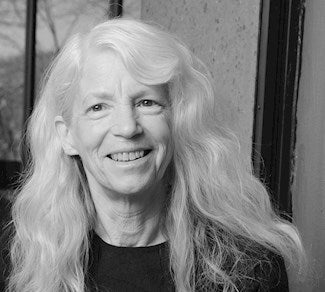
Lucia Phinney
Education
University of Virginia, Master in Landscape Architecture
University of Virginia, Master of Architecture
New College, Bachelor of Architecture
Biography
Lucia Phinney holds an undergraduate degree from New College (Sarasota Florida) and Masters degrees in Architecture (1979) and Landscape Architecture (2003) from the University of Virginia. She teaches design studios and seminars at the undergraduate and graduate levels. Her seminars have focused on human microclimates, constructing weather, microcontrollers, and material representation through relational modeling using the Grasshopper plug-in for Rhino. Her studios emphasize both the spatiality of the section in the context of public space and modes of engaging the earth through carving, embedding, burying, and absorbing. She emphasizes ecological and 3D spatial relationships in the context of public gathering. Drawing on the history of painting, poetry, and drama, she proposes interventions that change the definition of architecture to encompass natural process.
Her research websites have included Virginia Wood Flows (with Lionel Devlieger), Project Albemarle, Data Animal, and dripps+phinney studio (with Robin Dripps). She co-taught a studio with Philip Yuan and Chao Yan of Tonji University. Our studio work was published as Matter Aggregation by Oro Editions and student projects were exhibited at the Shenzhen Biennale of 2020. Her independent design research has been published nationally and internationally.
Lucia Phinney’s built work is prominently displayed on a 130-acre farm in the Virginia Piedmont. She deals with the unobserved edge shared between construction and ecology. She invents techniques to create comfortable microclimates while shaping the terrain for hydrology, solar infrastructure, and rotational grazing. Working with construction, water works, and agriculture, as well as scaffolding systems, operable shade fabric, and other lightweight materials, she has produced a body of work revealing different ways that the interior life of architecture can engage its political and natural context. During the past 45 years she has also co-designed a sequence of inventive additions, modifications, and details to the farmhouse at this rural Virginia location.