
Why Become a Planner?
Urban planning empowers communities to envision their future, helps to identify critical challenges, and facilitates the development of plans, policies, and designs to address those challenges. Rapid and intensifying urbanization requires a new generation of planners who can lead cities to healthy and sustainable built environments, more affordable housing, economic opportunity for all, and just and sustainable transportation systems—to name several of the challenges with which planners engage. As a profession, planners bring multiple skills and a range of competencies to bear on the integrated social and technical demands of cities and regions. Planners make a better future possible!

Why UVA Urban and Environmental Planning?
Urban + Environmental Planning at UVA prepares future planners to tackle the critical challenges faced by cities around the world. Inside and outside the classroom, we engage one another in that mission with a stimulating, supportive academic environment that values the intellectual breadth and diversity within our community. We’re excited by the growth of our program and the arrival of Dean Malo Hutson to the School of Architecture. Dean Hutson has expressed a vision that addresses environment, equity, and human wellbeing through design and policy, infused with an empathy towards people and our environment. In Urban + Environmental Planning, this ethic sits at the core of our teaching, research, and action in the world.
Our professional programs give students critical skills and knowledge, emphasizing methods of analysis, theories of planning, and creative strategies for implementation. We prepare students to actively plan for tomorrow's cities through innovative strategies of analysis, design, policy, and community engagement. Our students experience the practice of planning first-hand through research, design and community-driven projects, internships, interdisciplinary study, and national and global travel experiences. MUEP graduates are eligible for certification by the American Institute of Certified Planners after two years of professional practice.
Commitment to Inclusion + Equity
Planning professionals have the knowledge, skills and ethical commitment to promote equity, by offering a holistic view of impacts and opportunities related to economic development, land use, resiliency and sustainability, cultural preservation and other factors that bridge the worlds of built environment design, policy and full societal potential. Equity is a necessary guiding principle for all planners, who work as advisors, advocates, and decision makers in communities confronting and seeking to deal with historic and ongoing legacies of racism other forms of oppression across the globe. As planning educators, we believe we can learn important lessons from planning’s past and develop new approaches to equitably envisioning, building, and managing cities and natural environments. Our curriculum emphasizes how planning can contribute to more equitable places, and we seek to foster inclusion and diversity within our walls and among future planning professionals through active mentorship and support.
Key Facts*
6:77:1 — Student/Faculty Ratio
96% — Student Retention Rate
100% — Student Graduation Rate
100% — Employment in Planning-Related Positions One Year after Graduation
*Planning Accreditation Board Public Information, 2023
Excellence in Teaching and Research
The faculty of Urban + Environmental Planning are award-winning educators and leaders in planning research. Students in the Department can explore within multiple areas of planning, including environment and health, land use, housing and community development, transportation, planning in the international context, and urban design. We offer courses in each of these areas, and students build their specializations in an area of their choosing, and we encourage you to build your own across traditional boundaries.
Our faculty are engaged in research addressing key challenges across the globe. Students have the opportunity collaborate as research assistants with faculty on all these topics and more. Our major research areas include:
+ BIOPHILIC CITIES: developing a network of cities around the world to test innovative ways to integrate nature into the fabric of urban life
+ SMART TECHNOLOGIES and SMART MOBILITY: investigating emerging systems of civic technologies, connected and automated mobility, GIS systems, and data-driven analytics and visualization
+ DESIGN and HEALTH: forming meaningful collaborations between designers, planners, and members of the medical, nursing and public health communities to address urban health challenges
+ SOCIAL JUSTICE: developing empowerment strategies for disadvantaged populations in relationship to their neighborhoods, histories, resources, and public spaces
Interdisciplinary Opportunities
Urban + Environmental Planning is located in the nationally ranked UVA School of Architecture, and we offer opportunities to earn certificates in Urban Design, Historic Preservation, and Real Estate together with the MUEP within two years. UVA is one of the top-ranked universities in the nation, and planning students take courses across the university to contribute to their degree, including environmental science, engineering, public policy, public health, law and other allied fields. Students can enroll in dual degree programs in fields including Public Policy, Law, Urban Design, Landscape Architecture, and Architecture.
Why Study Planning in Charlottesville?
Charlottesville, Virginia is a place where the issues that planners worldwide care about – community, equity, housing, accessibility, resilience, public space – are front and center. Community members are actively working to address issues through action, and planners take a central role. Studying planning at UVA is an opportunity to work on these challenges through applied classes, internships, and research. Charlottesville also sits at the heart of one of the nation’s most well-developed local food systems, within a regional landscape that includes historic cities, agriculture, Shenandoah National Park, and the Chesapeake Bay watershed. Despite its remarkable natural setting, Charlottesville is on Amtrak’s Northeast Corridor rail line, less than two hours from Northern Virginia and the DC region, with the rest of the northeastern megalopolis beyond. Students and faculty learn and conduct research throughout our multifaceted region and beyond, with courses with travel programs to locations including Ghana, Morocco, India, and Germany.
DEGREE PROGRAMS
BUEP (Bachelor of Urban + Environmental Planning)
4-year undergraduate program
MUEP (Master of Urban + Environmental Planning)
2-year graduate program
PhD in the Constructed Environment
Doctoral program with Planning specialization
Our graduates work in the public, private and non-profit sectors. They build careers as urban planners for governments, sustainability directors, transportation specialists, and urban designers with architectural and planning firms, to name a few.
I hope to pursue work in the human-centered design of public spaces that promote physical, psychological, and social health for urban residents and their environment. The a-school if the ideal school for me to build upon my interest in making a difference through the design and advocacy of healthy communities. - Michaela, MUEP
Urban planning is such a well-rounded program. I have been able to take a variety of courses in politics, economics, and architecture. I studied abroad this past summer in Switzerland through the UVA Sustainable Europe course. The experience was amazing, i learned so much about aspects of transportation, water, and city planning through amazing professors as well as my own firsthand experience. - Caroline, BUEP
TOM EITLER (MUEP, 1987) SENIOR VICE PRESIDENT, ADVISORY SERVICES, URBAN LAND INSTITUTE
Tom Eitler runs the Urban Land Institute's Advisory Services Program, providing strategic advice to governments, institutions and companies on a wide variety land use, real estate development and public policy issues ranging from economic development, urban design, and municipal management associated with the built environment. The Urban Land Institute's mission is to provide leadership in the responsible use of land and in creating and sustaining thriving communities worldwide.
MARY KATHRYN FISHER (BUEP, 2016) ANALYST, PUBLIC WORKS PARTNERS, NYC
Mary Kathryn creates creative community engagement strategies from a design-thinking and strategic planning lens, specializing in public interest campaigns and public-private partnerships. With a particular expertise in land use and urban planning efforts, she builds and implements accessible tools and processes to ensure successful public outreach, translating complex regulatory issues into easily digestible information so community members can understand the implications for their everyday lives.
The graduate program in Landscape Architecture at UVA challenges students to imagine new landscape systems through rigorous research, design speculation, and the deployment of nascent technologies. We are committed to preparing our graduates to be critical thinkers and global citizens to form a more inclusive and resilient world while shaping the next generation of landscape practice.
Our graduate program is comprised of students coming from a wide variety of academic backgrounds, both with and without prior studies in landscape architecture.
Our students are encouraged to shape their own individual educational trajectories by integrating their design or non-design undergraduate backgrounds, intellectual interests, and skills into their graduate studies in landscape architecture. This fosters a rich and diverse thinking community united around a common commitment to create yet-unimagined and powerful propositions for a resilient built environment.
The Master in Landscape Architecture program is accredited by the National Landscape Architecture Accreditation Board (LAAB).
INTERESTED IN OUR MLA PROGRAM?
JOIN OUR CONTACT LIST

PATH 3.0: 97 CREDITS
The Path 3.0 Master of Landscape Architecture is a 3-year graduate professional degree with a minimum of 97 credits. It is designed for a student who holds a non-design undergraduate degree and whose educational background is not in landscape architecture or a student without a pre-professional undergraduate landscape architecture degree.
PATH 2.5: 78 CREDITS
The Path 2.5 Master of Landscape Architecture is a 2.5-year graduate professional degree with a minimum of 78 credits. It is for students with pre-professional undergraduate landscape architecture degrees, such as a Bachelor of Science in Landscape Architecture or Environmental Design. It is also designed for students holding degrees in landscape architecture from programs outside the U.S. that are not professionally-accredited in the United States.
PATH 2.0 ADVANCED: 62 CREDITS
The Path 2.0 Advanced Master of Landscape Architecture is a 2-year graduate professional degree with a minimum of 62 credits. It is designed for students with a U.S. accredited Bachelor of Landscape Architecture degree (Note: Students holding a U.S. accredited Bachelor of Science Landscape Architecture are Path 2.5 eligible).
PATH 2.0: 61 CREDITS
The Path 2.0 Master of Landscape Architecture is a 2-year graduate professional degree with a minimum of 61 credits. It is for students holding a U.S. accredited Bachelor of Science in Architecture degree.
Our curriculum is a structured series of semesters that build incrementally from a core base of knowledge and skills laid out in the first year. While the first year is fully prescribed in its course requirements, later semesters leave elective options that allow students to pursue their own individual interests that can lead to a final independent design research or MLA thesis studio.
The core of each semester is the design studio. The studio sequence exposes students to the range of scales and topical issues in landscape architecture. Supporting the design studios, we have three additional tracks of curricula in related technical and theoretical content. These courses focus on a range of design tools, from computation to fabrication; innovative technologies; the art and science of plants; and histories and theories of landscape architecture.
Advanced research studios are developed around interdisciplinary content and processes, enriching the students' experiences through diverse expertise and perspectives.
Students follow different curricular paths based on prior undergraduate study. There are four paths for earning a Master of Landscape Architecture at UVA. Details can be found at the Graduate Record linked below.
The multi-disciplinary ethos of the School of Architecture offers unique opportunities for students to structure and pursue dual graduate degrees. Dual degrees are offered with Architectural History, Architecture, and Urban and Environmental Planning. Pursuing a dual degree requires admission to each program, meeting the appropriate requirements.
Typically, a concurrent dual degree will require one additional year of study beyond the students designated MLA path.
HISTORIC PRESERVATION GRADUATE CERTIFICATE
The interdisciplinary program in Historic Preservation offers masters degree candidates in all of the School of Architecture’s disciplines (architecture, architectural history, landscape architecture and urban + environmental planning) the opportunity to expand their professional studies through specialized training in the theory, practice and ethics of historic preservation.
URBAN DESIGN GRADUATE CERTIFICATE
The Urban Design Certificate program is open to graduate students in any department of the School of Architecture who want to pursue an interdisciplinary program that focuses on the critical questions raised by planetary urbanization, from urban and infrastructural development, to social equity and resilience.
As of Spring 2019, UVA School of Architecture’s Master of Landscape Architecture program (Path 2, Path 2.5, and Path 3) is STEM-designated.
The Master of Landscape Architecture program at UVA, consistent with other schools and programs of Landscape Architecture nation-wide, includes curricular content that is essential to the comprehensive design and construction of landscapes. It teaches students to use scientific, social scientific and/or humanistic approaches on environment-related issues, including instruction in the principles of ecology and environmental science and related subjects such as policy, economics, social studies, planning, design, natural resources and the interactions of humans and nature. The program’s STEM-designation allows our international MLA graduates to apply for the Department of Homeland Security’s optional practical training (OPT) extension program for F-1 students with STEM degrees.
The field of landscape architecture is continually evolving in response to profound environmental, social, and cultural change. Landscape Architecture at University of Virginia is committed to preparing the next generation of practitioners, scholars, and educators to engage these conditions critically and creatively.
As a department, we advance innovative ideas, insightful perspectives, new techniques, and synthetic design frameworks that operate across contexts and scales. Our approach positions landscape architecture as a vital cultural and ecological practice, foregrounding social and environmental health, technology, and cultural expression as interconnected forces shaping the built and living environment.
Led by internationally recognized and deeply engaged faculty, the program fosters expansive ways of thinking and making. Students encounter diverse ways of understanding socio-ecological systems, innovation and tradition, interspecies relationships, material and artistic expression, and the realities of living in a rapidly changing world.
From the outset of their studies, students are encouraged to shape individualized educational trajectories that build on their prior backgrounds, interests, and skills. The program cultivates students’ passions while equipping them with strong conceptual and technical foundations. Graduates are prepared to work both within and across disciplinary boundaries and alongside human and non-human communities, actively building and advancing more inclusive, resilient, and imaginative futures.
DEGREE PROGRAMS
MLA (Master of Landscape Architecture)
2-year, 2.5 year, or 3-year graduate program
Since Spring 2019, UVA School of Architecture's Master of Landscape Architecture Program (Path 2, Path 2.5, and Path 3) is STEM-designated.
CURRICULAR FOCUS
Our curriculum challenges our students to imagine new landscape systems through rigorous research, design speculation, and the creative deployment of nascent technologies while remaining grounded in the discipline's professional practices and methods of material construction.
Design Studio:
Our curriculum is built around the design studio (6 credit hours), taken each semester. The studio sequence exposes students to the range of scales and topical issues in landscape architecture. In emphasizing the ability to read and interpret a site within its context and shape its future based on those findings, the initial studios are based locally and emphasize on-site experience and design process generated directly from the documentation of place. The second-year studios introduce additional social, political and environmental complexities in the contexts of rural, urban and territorial-scale landscapes while instilling community-engaged and technologically experimental design methods. Studios in the third year offer students opportunities to participate in interdisciplinary studios in cities and locations around the country and abroad. These advanced studios are research based and encourage students to investigate broader issues beyond a specific design problem and arrive at innovative, bold and highly grounded proposals.
Supporting the design studios are three curricular tracks related to technical and theoretical content:
History, Theory + Method:
This track establishes underpinnings of historical and contemporary precedents, lineage of ideas and design lexicons, frameworks for creative practice, and research methods in landscape architecture and in affiliated fields — challenging students to put their scholarly and design work into an evolving body of discipline and profession.
Ecology + Technology ("Ecotech"):
This track integrates the design with science of living materials and environmental phenomena — such as plants, soil, water, climate and topography — as well as local and regional ecological systems through material assembly, site engineering, landscape construction and technologies, with a focus on innovation and testing in multiple contexts and scales.
Media + Design Computation:
This track investigates a broad range of digital and computational design tools — including drawing, modeling, simulation, monitoring, and advanced fabrication — and their creative synthesis in use to develop design, design processes and workflows, while incorporating historical and conceptual contexts to the technical exploration and experiment.
Our MLA program emphasizes land-based learning and research that engage landscapes in real time. Students study physical processes, patterns of use, and cultural narratives directly on site, shaping design and research through observation, testing, and care for the land. Through place-based inquiry and hands-on making, students respond to the contingencies of sites, translating material encounters into analytical and speculative work that expands design imagination and deepens ethical, social, and political awareness.
MILTON LANDLAB
The Landscape Architecture Department leads the development of Milton LandLab — a collaboration between faculty and students, with support from the FabLab. Milton LandLab provides a unique opportunity for students to study and propose methodologies and practices for design research based in landscape mediums. Milton LandLab is based at the 172-acre Milton Airfield, located about eight miles east of Campbell Hall, and a formerly operating airport owned by the University of Virginia. As a historically disturbed site (from its use as a WWII airstrip to its present utilization by the Rivanna Radio Control Club's model airplane runway), with frontage along the Rivanna River, forested in parts, meadowed in others, Milton LandLab provides a site for extended study, large-scale intervention, and intimate engagement with landscape media. As a University resource, Milton LandLab is a shared space for learning and experimentation — it offers a unique place for the UVA School of Architecture's students and faculty to engage in innovative research and teaching in landscape design — a place and facility to experiment with landscape forms and processes rigorously on-site and over time.
MORVEN SUSTAINABILITY LAB
Morven, UVA’s place-based sustainability lab directed by Elizabeth Meyer, fosters collaborative learning and exploration grounded in socio-ecological values and leading to innovative policies and practices that tackle urgent climate challenges. Through innovative pan-university exploration and novel community co-creation, Morven’s 2,900-acre site allows students and faculty to transform how we perceive, imagine, discover, and test alternative sustainable futures where humans, other species, and the planet can flourish. Through both individual and collective experiential learning and exploring, Morven’s landscape laboratory incubates the next generation of citizen leaders prepared to address our changing climate. The Department of Landscape Architecture integrates a wide spectrum of courses, research projects, and departmental programming at Morven — from required EcoTech courses and research studios to faculty research plots and student thesis projects — while also supporting its Strategic Action Plan 2025-2035.
Our MLA program is shaped by faculty research that is deeply embedded in real landscapes and communities through unique collaborations and long-term partnerships. Students learn within ongoing research initiatives — working alongside faculty on pressing questions of climate, infrastructure, ecology, equity, and culture — gaining firsthand experience in how design knowledge is produced, tested, and translated into impact.
ADAPTIVE ENVIRONMENTS LAB
The Adaptive Environments Lab is a transdisciplinary research initiative that brings together design, health, environmental science, and computation to develop built environments that can sense, learn, and adapt amid rapid environmental and societal change. Moving beyond predictive design models, the Lab reframes designers as orchestrators working with ecological processes, communities, and computational systems to enable incremental, responsive transformation over time. Through sustained environmental sensing, micro-scale adaptive interventions, and human–computer partnership, the Lab creates prototype workflows that link digital intelligence with physical change, advancing new methods for resilient, health-promoting environments. The Lab is led by Landscape Architecture faculty Bradley Cantrell and School of Medicine faculty Matthew Trowbridge.
ARCTIC DESIGN GROUP
The Arctic Design Group (ADG), founded in 2013 and directed by Landscape Architecture faculty Leena Cho and Architecture faculty Matthew Jull, is a design research initiative focused on landscapes and communities at the frontline of climate extremes. Working across design, science, engineering, and the humanities, the ADG collaborates with tribal organizations, local governments, and federal agencies to address the spatial, material, and cultural consequences of rapid environmental change. Grounded in the synergy between science-based inquiry and community-driven knowledge, the ADG’s action-oriented work spans geospatial analyses and exhibitions, data-intensive fieldwork, and the development of design and planning guidelines. The ADG leads the multiyear, award-winning traveling studio Permafrost Futures, bringing students to Arctic regions undergoing profound transformation and situating interdisciplinary climate research within lived conditions, place-based inquiry, and sustained partnerships.
BUDS (BIOLOGY OF UNDERSTANDING DECIDUOUS SYSTEMS) LAB
The BUDS Lab takes an interdisciplinary approach to studying the relationships between phenotype, genotype, and environment in tree species. Led by Environmental Sciences and Landscape Architecture faculty Meghan Blumstein, the Lab aims to better understand the drivers of resilience to stress in tree species and their potential to respond to future change. The Lab’s research uses a combination of experimental, observational, and modeling studies to both drill down to the genes and alleles influencing phenotypes and scale up to examine how patterns of climate, demography and local adaptation may influence future response to change. The Lab utilizes a broad range of tools from genomics and transcriptomics to quantitative genetics, plant physiology, and spatially explicit modeling.
COMMUNITY ENGAGEMENT LAB
Led by Landscape Architecture faculty C.L. Bohannon, the Community Engagement Lab advances collaborative, community-centered design, research, and teaching that address pressing social and environmental challenges. Grounded in equity, reciprocity, and public impact, the Lab brings students, faculty, and community partners together to co-define challenges and co-create resilient landscape solutions. Through design studios and applied research, the Lab integrates participatory methods, performance-based design, and place-based knowledge into the curriculum. Projects focus on food systems, climate adaptation, public space, civic infrastructure, environmental justice, and landscape performance, emphasizing tangible outcomes responsive to community priorities. By supporting sustained partnerships with municipalities, agencies, nonprofits, and community groups, the Lab fosters engaged scholarship and trains students in collaborative, ethical, and impactful landscape practice.
MATERIAL FRONTIERS OF ENERGY
Material Frontiers of Energy explores how minerals, infrastructures, and landscapes underpin the promise — and the contradictions — of the green energy transition. Led by Landscape architecture faculty Matthew Seibert, this research initiative reframes energy systems through through material protagonists and speculative tools that reveal hidden geographies of extraction, conflict, and care. Positioned between design, political ecology, and critical mapping, the work advances landscape architecture as a key discipline for understanding and reshaping the spatial politics of decarbonization.
NATURAL INFRASTRUCTURE LAB
The Natural Infrastructure Lab (NIL), directed by Landscape Architecture faculty Brian Davis and Michael Luegering, works to develop innovative and culturally significant forms of coastal and riverine infrastructure through landscape design research. They partner with governmental, non-profit, and private entities to focus on the potential of plants, sediments, currents, waves, rocks, and the historical and contemporary human practices that engage them to deliver the services society relies on, including coastal resilience, landscape migration, and flood protection. NIL research products work across scales and provide partners with the concepts, forms, and data-driven insights needed to implement innovative natural infrastructure that enhances human and ecological health over time. The Natural Infrastructure Lab supports the EcoTech course sequence in the Department of Landscape Architecture connecting curriculum and research.
SEEDING PEDAGOGIES COLLABORATIVE
The Seeding Pedagogies Collaborative, led by Landscape Architecture faculty Emily Wettstein, is a collaboration between students and educators committed to reimagining landscape-forward design pedagogies, by positioning our pedagogy as both the site and subject of design. This project calls for the disruption of folk pedagogy — teaching the way we were taught — by utilizing the unique skills and sensibilities of landscape designers to critically analyze existing conditions, operationalize seemingly fixed variables, and envision novel futures. This work includes the development of an alternate landscape architecture signature pedagogy from the discipline’s core concepts and methods, the articulation, transformation, and reimagination of design pedagogy’s working model, and the development of collaborative design methods through which to engage both design students and educators in the project of pedagogical design.
We promote and create global research and travel opportunities for our students, with the recognition that the future of landscape architecture is increasingly global. Direct engagement with the sites and communities we are studying and designing for is a critical part of our curricula. Our students travel locally and nationally, but also internationally, to experience design in-situ, to engage in fieldwork, and to gain a deeper awareness of global cultures.
Students have many options to study abroad for summer sessions or for full semesters. UVA School of Architecture offers ongoing programs in Venice, Vicenza, Barcelona, and China, and continues to build its study abroad opportunities.
In addition, our research studios focus on global sites, cultures and questions; Recent studios, as well as ongoing long-term research developed by faculty, have speculated on design propositions in India, China, Argentina, Japan, Germany, Austria, Mexico, Norway, and more.
Our aim is to provide the opportunity for you to build on past experiences, while encouraging you to develop new competencies, to ask probing questions, to experiment with cutting-edge technologies in digital heritage and digital humanities, to hone your voice through original research and writing, and to shape your graduate education to best support your own interests and aspirations.
Our core courses encourage you to understand key methods and theoretical approaches, to explore buildings and landscapes through hands-on fieldwork and documentation, to experiment with digital technologies to record existing sites and to catalyze new interpretations. We take full advantage of the unique opportunities offered by our proximity to two UNESCO World Heritage sites––the University of Virginia’s Academical Village and Monticello–––which serve as living laboratories, alongside numerous historic sites in and around Charlottesville. At the same time, the courses and study abroad opportunities that we offer open windows onto the history of cities, buildings, and landscapes around the world.
The MArH program provides the opportunity to hone core competencies in architectural history that prepare you for a wide range of future career possibilities––from public history and historic preservation to curatorial roles in leading cultural institutions or careers in academia, research, and publishing. At the same time, you are invited to take advantage of rich offerings in the Architectural History Department, across the School of Architecture, and within the broader University.
The thesis represents the culminating experience in the program and a major focus of your energies during the second year. Often students begin research for the thesis during the summer between the first and second years of the program, and many have been supported in this effort with grants available through the department and other funding sources at UVA. The thesis is a work of significant original research developed in close dialogue with a faculty advisor and two additional committee members.
36 CREDITS Minimum
The Master of Architectural History (MArH) is a 2-year graduate degree with a minimum of 36 credits at the graduate level. Typically students take credits beyond the 36 required during their four semesters of residency, generally attaining 48 credits by the end of the program.
In fall 2024, the Architectural History Department at the UVA School of Architecture established a new Public History Fellowship program. The program seeks to bring new energy and dynamism to the public experience of historic sites — from house museums and main streets, to courthouse squares and former plantation landscapes — by equipping a new generation of graduate students with the experience, knowledge, and creativity to bring often overlooked histories and multiple perspectives to life at sites across Virginia.
The Public History Fellowship program, which includes internship experience and a stipend in support of graduate study, is open to applicants who are entering the Master of Architectural History (MArH) program at UVA.
Any potential Master of Architectural History student can apply for a dual degree in Landscape Architecture, Architecture, or Urban and Environmental Planning.
The Architectural History Department offers a direct path to receiving a Master of Architectural History (MArH) for its qualified undergraduate majors. Students must meet a minimum cumulative GPA of 3.3 to be eligible.
Current students who are interested in the fifth-year MArH should meet with the Architectural History Undergraduate Director when planning their courses for their third year. We encourage you to complete your undergraduate thesis during the fall semester of your fourth year (before the MArH application deadline in early January).
Admitted students should meet with the Architectural History Graduate Director to develop a plan for submitting a draft graduate thesis proposal in the spring semester of your fourth year. Those students interested in also obtaining the Historic Preservation Certificate should consult with the director of that program.
A minimum of 30 credit hours of graduate-level courses is required in order to complete the Fifth-Year MArH degree. Students graduating with credits beyond the 120 required for the Bachelor of Architectural History may be able to transfer in some graduate courses for graduate-level (5000-level) courses already taken.
Student Perspectives
Learn about the MArH program from our students.
INTERESTED IN OUR MARH PROGRAM?
JOIN OUR CONTACT LIST
Our aim is to equip students with a broad knowledge of histories of architecture and cultural landscapes, to hone time-honored and cutting edge approaches to documenting, understanding, and interpreting the built environment, to open future possibilities by encouraging our students to ask challenging questions, to shed new light on both familiar and overlooked voices and spaces, and to discover the rich tapestry of experiences that have shaped cities, buildings, and landscapes close to home and across the world.
122 CREDITS
The Bachelor of Architectural History is a 4-year undergraduate degree with a minimum of 122 credits.
Undergraduate students entering the School of Architecture share a Common First Year Curriculum. Students take core courses in three School of Architecture departments: Architecture, Urban + Environmental Planning, and Architectural History to provide a framework for the study of contemporary culture through observation, analysis, and design. Students must pass each core course with a grade of C- or higher. During the spring semester of the first year, students choose an intended major: Bachelor of Architectural History, Bachelor of Science Architecture, or Bachelor of Urban and Environmental Planning.
By the end of the first semester of their second year, each student decides whether they prefer the Architectural History concentration or the Historic Preservation Concentration.
The Architectural History concentration provides a broad introduction to histories of architecture, cities, and cultural landscapes. To support this breadth of understanding, we ask students to take one course examining material from distinct cultural and geographical areas (the Americas, Asia, Europe, and the Mediterranean). Appropriate historic preservation, landscape architecture, and art history courses may be used to fulfill architectural requirements with the approval of the Director of the Undergraduate Program.
Students have the ability to select additional architectural history electives to support their interests and the development of a thesis. The thesis provides the opportunity to pursue original research on a subject chosen and developed by the student in close dialogue with a faculty advisor.
The Historic Preservation Concentration allows students to gain knowledge and expertise in the multi-disciplinary areas of historic preservation, critical heritage, and public history. In addition to core requirements focused on core professional competencies, students are encouraged to take additional electives of their choice in historic preservation and architectural history, as well as approved courses in Architecture, Landscape Architecture, and Urban and Environmental Planning. Relevant courses from the College of Arts & Sciences and the School of Engineering may also be applied towards the concentration with the Historic Preservation Program Director’s approval.
An internship in preservation/public history is a recommended part of the curriculum. All students in the Historic Preservation Concentration also have the opportunity to pursue original research on a subject chosen and developed by the student in close dialogue with a faculty advisor.
A minor in Architectural History requires 15 ARH credits, including ARH 1010 and ARH 1020, and 9 credits of ARH electives with a minimum grade of C-.
No thesis is required.
The pan-university minor in Public Humanities in Place will introduce undergraduate students to the importance of place and story in the shaping of the American imagination. As our national discourses become increasingly polarized, and our lives are more digital and disembodied, this minor offers undergraduate students an introduction to strategies that reground, repair, and renew communities and our imagination for localities, and the importance of the humanities in restoring the fabric of everyday life.
This minor is a 15-credit, 5-course program and is open to all undergraduate students at the University.
The Architectural History Department offers a direct path to receiving a Master of Architectural History (MArH) for its qualified undergraduate majors. Students must meet a minimum cumulative GPA of 3.3 to be eligible.
Current students who are interested in the Fifth-Year MArH should meet with the Architectural History Undergraduate Director when planning their courses for their third year. We encourage you to complete your undergraduate thesis during the fall semester of your fourth year (before the MArH application deadline in early January).
Admitted students should meet with the Architectural History Graduate Director to develop a plan for submitting a draft graduate thesis proposal in the spring semester of your fourth year. Those students interested in also obtaining the Historic Preservation Certificate should consult with the director of that program.
A minimum of 30 credit hours of graduate-level courses is required in order to complete the Fifth-Year MArH degree. Students graduating with credits beyond the 120 required for the Bachelor of Architectural History may be able to transfer in some graduate courses for graduate-level (5000-level) courses already taken.
WHAT DISTINGUISHES ARCHITECTURAL HISTORY AT UVA?
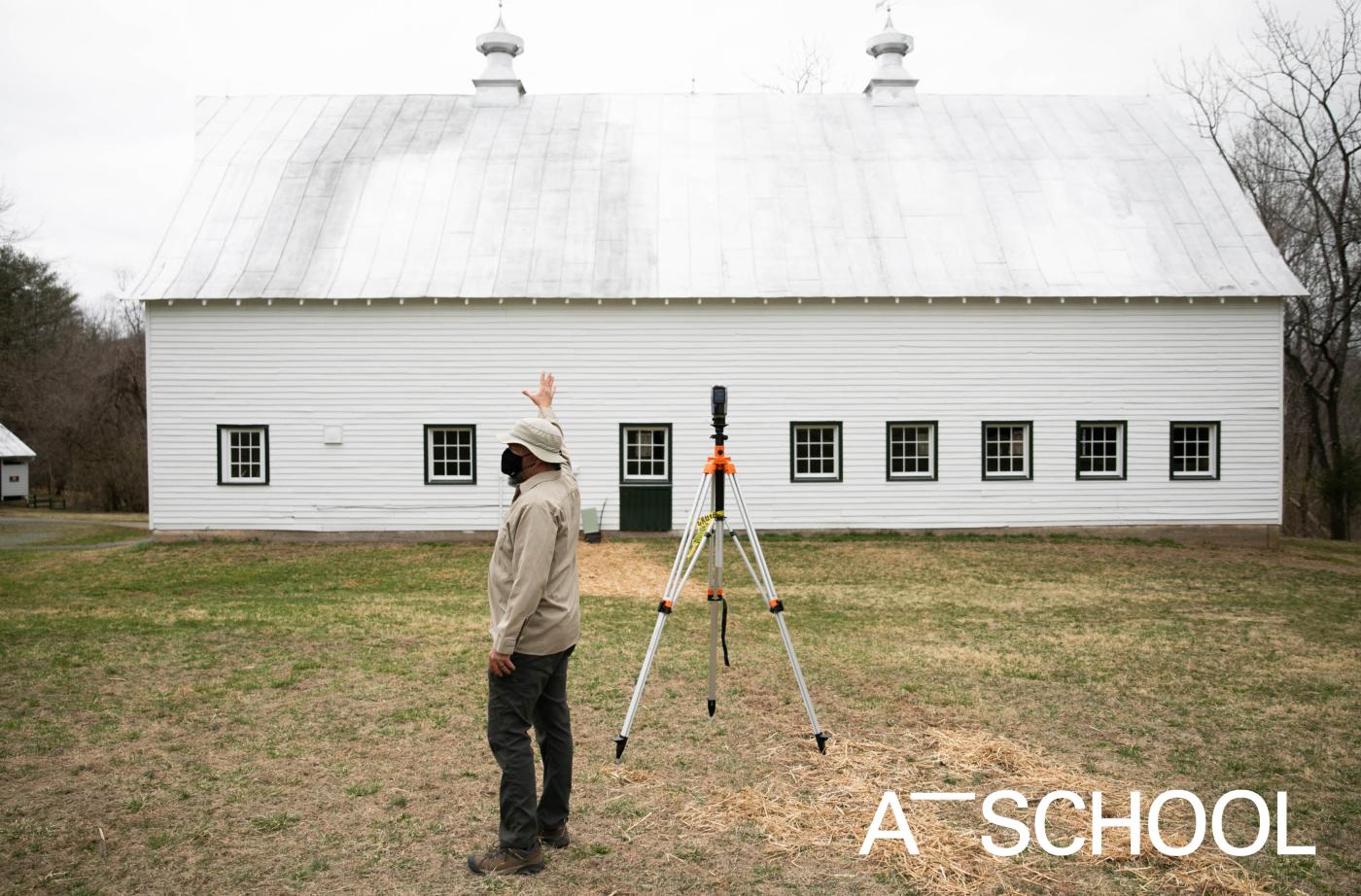
We are the only Architectural History program that is situated in a UNESCO World Heritage site – the University of Virginia’s Academical Village — and in a region featuring captivating cultural landscapes and historic sites. Our students have access to an extraordinary learning laboratory, within and beyond UVA — places where innovative approaches to the history of the built environment are being tested and where long-overlooked voices are inspiring new conversations.
Our students benefit from unique opportunities:
- Gaining hands-on experience documenting & interpreting historic sites & cultural landscapes
- Experimenting with new digital tools for documentation & interpretation
- Exploring existing archives & creating new ones
- Tailoring coursework to support varied interests, drawing on offerings in the department as well as across & beyond the School of Architecture
- Developing foundational skills of critical thinking & writing
- Pursuing original research for a thesis in close dialogue with a faculty advisor
Even as we take full advantage of the rich historical landscapes that surround us in and beyond Charlottesville, Architectural History @ UVA opens windows onto histories of cities, buildings, and landscapes around the world. Many of our students take advantage of study-abroad opportunities in Rome and Venice, as well as wide-ranging internships and fieldwork opportunities, often drawing on our exceptionally generous alumni network.
DEGREE PROGRAMS
Bachelor of Architectural History (BArH)
4-year undergraduate program
Optional concentration in Historic Preservation
Master of Architectural History (MArH)
2-year graduate program
Optional Certificate in Historic Preservation
FACULTY
Architectural History Department
Affiliated Faculty
- Lisa Goff, American Studies + English, Director of the Institute for Public History
- Michael Lee, Landscape Architecture
- Angel Adams Parham, Sociology
- Erin Putalik, Landscape Architecture
- Andrea Roberts, Urban & Environmental Planning
- Jessica Sewell, Urban & Environmental Planning
Mellon Postdoctoral Fellows in Race, Place, and Equity
- Olanrewaju Lasisi (2023-24)
- Ana Ozaki (2023-24)
-
Rina Priyani (2024-26)
Faculty Perspectives
UVA Architectural History Chair Sheila Crane and Professor Louis Nelson share highlights of the program.
The Master of Architecture program, rich in instrumental and methodological diversity, exposes students to a rigorous and inventive architectural education. We enjoy a collaborative community, comprised of internationally recognized faculty who are primarily in residence throughout the semester to engage an energetic and culturally diverse student body. The program prepares graduates as design leaders, global citizens, and critical scholars. Our students learn to actively shape the values, boundaries, and methodologies of architectural practice.
WHY UVA ARCHITECTURE?
UVA Architecture Chair Jeana Ripple, Graduate Program Director Seth McDowell, and Assistant Professor Devin Dobrowolski share highlights of the program.
Learn about the M.Arch. program from our current students.
WHO SHOULD APPLY
We welcome students from diverse scholarly and professional backgrounds who are interested in critically shaping the built environment. As a student here, you have the opportunity to take advantage of UVA’s proud history as a renowned research university, with nationally and internationally ranked programs, distinguished faculty, and robust resources.
The Master of Architecture program welcomes applicants with any four-year Bachelor of Arts or Bachelor of Science degree. Diverse scholarly and professional backgrounds enrich our educational environment in the first-professional graduate MArch program. Applicants with a previous architecture degree are eligible for advanced-placement.
INTERESTED IN OUR M.ARCH PROGRAM?
JOIN OUR CONTACT LIST
PATH 3.0: 99 CREDITS
The three-year Master of Architecture (First Professional) is a graduate professional degree intended for individuals who have completed an undergraduate degree in any field of study from an accredited college or university. The Path 3 program begins in July with the “Summer Design Institute” a four-week intensive introduction to design tools, concepts, and methodologies prior to the first semester of study. After the introductory summer session, students are expected to complete the program in six semesters.
PATH 2.0: 66 CREDITS
The two-year Master of Architecture (First Professional) is an advanced placement path, intended for students who have completed an undergraduate degree in architecture and received a recommendation from the admissions committee for advanced placement. Advanced Placement consideration is given to students who have completed a Bachelor of Science Architecture or a Bachelor of Architecture Degree.
DUAL DEGREES
Any potential Master of Architecture student can apply for a dual degree in Landscape Architecture, Architectural History, or Urban and Environmental Planning. Typically, a concurrent dual degree will require one additional year of study beyond the students designated MArch path. Learn more about our Dual Degrees and Graduate Certificates.
PREVIEW OF SELECT AY 24-25 COURSES
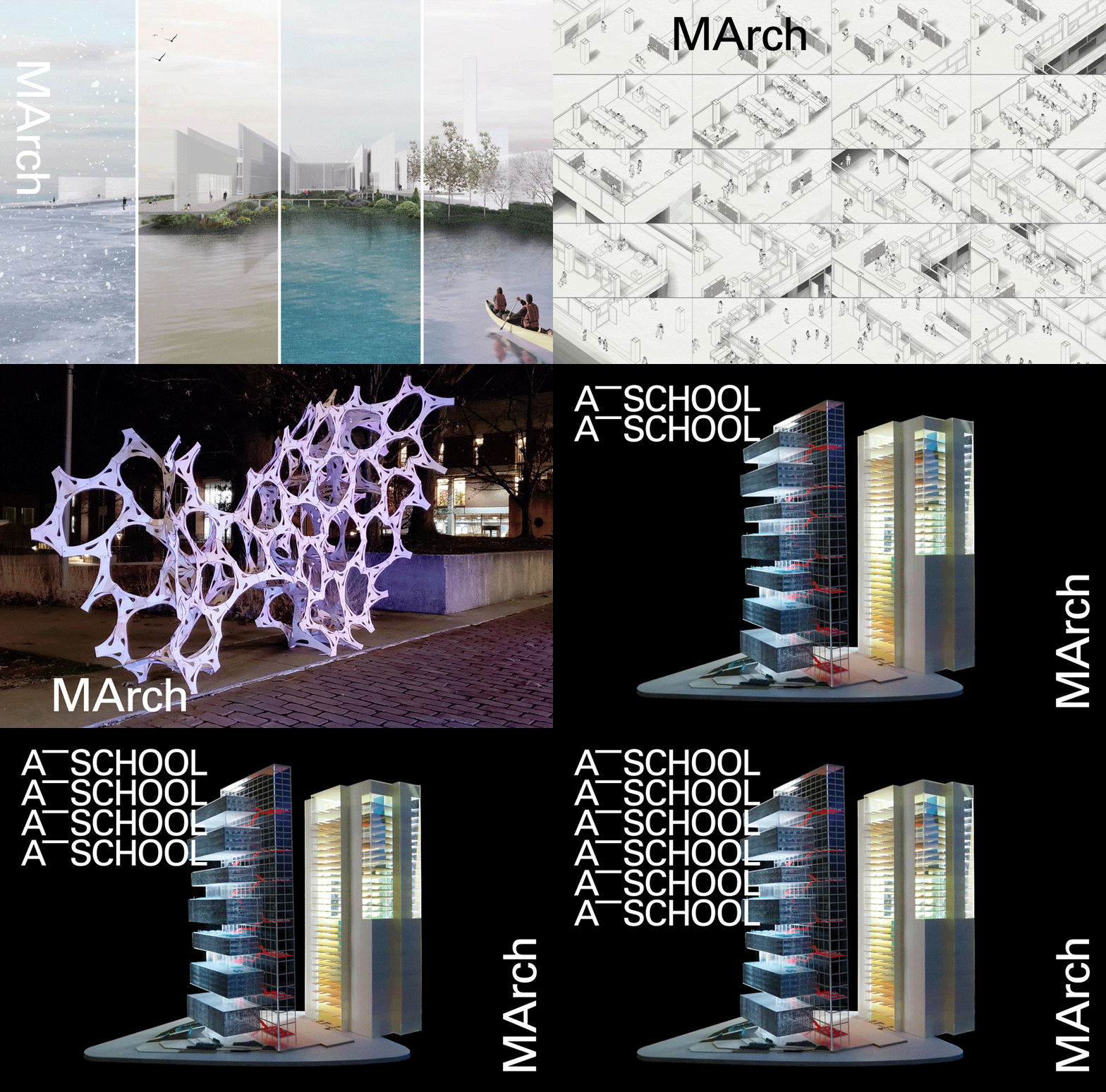
The undergraduate curriculum in Architecture introduces students to methodologies to critically understand and creatively transform the built environment. Design innovation requires creativity, technical knowledge, cultural awareness, risk-taking, and meaningful questioning. Our curriculum uses design as a mode of critical inquiry to explore questions and pose new visions for a range of scales, all of which constitute the disciplinary realm of architecture: from cities, territories, infrastructure and buildings to rooms, installations, furniture, and clothing. The first year of study is a shared Common First Year curriculum, wherein students take courses in three School of Architecture departments: Architecture, Urban + Environmental Planning, and Architectural History.
125 CREDITS
The Bachelor of Science Architecture is a 4-year undergraduate degree with a minimum of 125 credits.
PREVIEW OF SELECT AY 24-25 COURSES
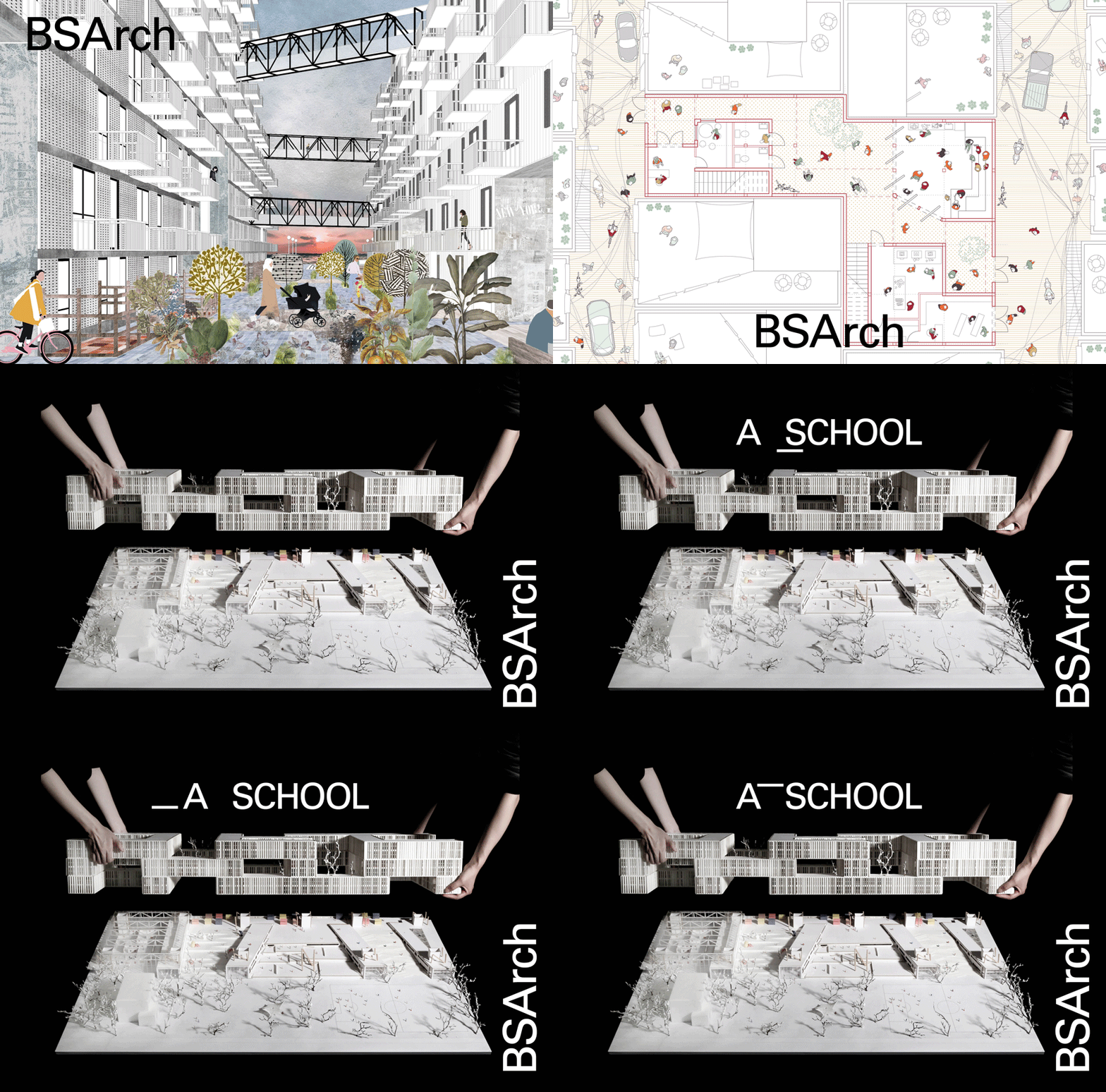
Undergraduate students entering the School of Architecture share a Common First Year Curriculum. Students take core courses in three School of Architecture departments: Architecture, Urban + Environmental Planning, and Architectural History to provide a framework for the study of contemporary culture through observation, analysis, and design. During the spring semester of the first year, students choose an intended major: Bachelor of Architectural History, Bachelor of Science Architecture, or Bachelor of Urban and Environmental Planning.
During the spring semester of the first year, while completing the Common First Year, students choose an intended major: Bachelor of Architectural History, Bachelor of Science Architecture, or Bachelor of Urban and Environmental Planning.
Those that choose the Bachelor of Science Architecture path will continue to complete a studio-based curriculum that is supported by courses in history/theory, building technologies, design research methods and more. Each semester, students will take a studio (6 credits) and other core courses taught within the School of Architecture, supported by electives taught by departments across the University.
WHAT IS THE 4+2?
With the Bachelor of Science Architecture, our students will be considered for advanced placement in the professional Masters (graduate) degree program, typically known as a 4+2 education sequence. Our students are eligible to obtain their professional graduate degree in a total of 6 years, including the 4 years of undergraduate study at UVA. Our graduates have consistently been accepted to the top-ranking M.Arch. programs across the nation, including our own.
Our undergraduate students also have the added value of learning alongside our graduate students, in cross-listed research studios and to be taught by the same award-winning faculty teaching within our highly-ranked graduate programs.
A Minor in Architecture provides students with an opportunity to develop a basic understanding of, and appreciation for, architecture as an important component of culture and the built environment. The Minor in Architecture is offered to all students at the University. Students who complete the Minor range from those whose major is in a related field and who wish to expand the boundaries of that endeavor, to those considering graduate study in architecture.
The Design Minor leverages the strengths and unique disciplinary practices of the four departments in the School of Architecture (Architecture, Landscape Architecture, Urban & Environmental Planning, and Architectural History). The curriculum is grounded in the disciplinary practices of design, while incorporating expertise from numerous allied disciplines and fields of study. The main objective is to serve a wide population of undergraduate students throughout the University who are interested in complementing their current course of study with the methodologies of Design Thinking, spatial and material practices, and the strategies of creative problem-solving.
With a stellar roster of faculty focused on design excellence and intellectual development, we provide a comprehensive body of knowledge that addresses the most pressing historical and current spatial challenges confronting society. These challenges are addressed through a rigorous design studio sequence, that embodies a diversity of approaches, scales, methods and instruments affiliated with design. The curriculum is enhanced by an expansive set of courses that include history, theory, building technology, visualization, computation, urbanism, and professional practice, among others. Utilizing design as the primary objective of instruction, UVA Architecture is committed to shaping the citizen-architect of the twenty-first century. In examining a multiplicity of spatial conditions—from interiors to buildings to public space to open territories—we shape architects that will become critical mediators between society and space.
PREVIEW OF SELECT AY 24-25 COURSES

DEGREE PROGRAMS
BS ARCH
4-year undergraduate degree in architecture
M ARCH
3-year accredited professional graduate degree program with a 2-year advanced standing track
WHO SHOULD APPLY
We welcome students from diverse scholarly and professional backgrounds who are interested in critically shaping the built environment. As a student here, you have the opportunity to take advantage of UVA’s proud history as a renowned research university, with nationally and internationally ranked programs, distinguished faculty, and robust resources.
UVA offers an affordable, world-class education that is consistently ranked among the nation’s best. Undergraduate students are drawn to UVA to learn architectural design within the context of a leading liberal arts education. Undergraduate students are exposed to a broad body of knowledge shared across the university and across architectural disciplines during their first year of studies.
The Master of Architecture program welcomes applicants with any four-year Bachelor of Arts or Bachelor of Science degree. Diverse scholarly and professional backgrounds enrich our educational environment in the first-professional graduate MArch program. Applicants with a previous architecture degree are eligible for advanced-placement.
CURRICULAR FOCUS
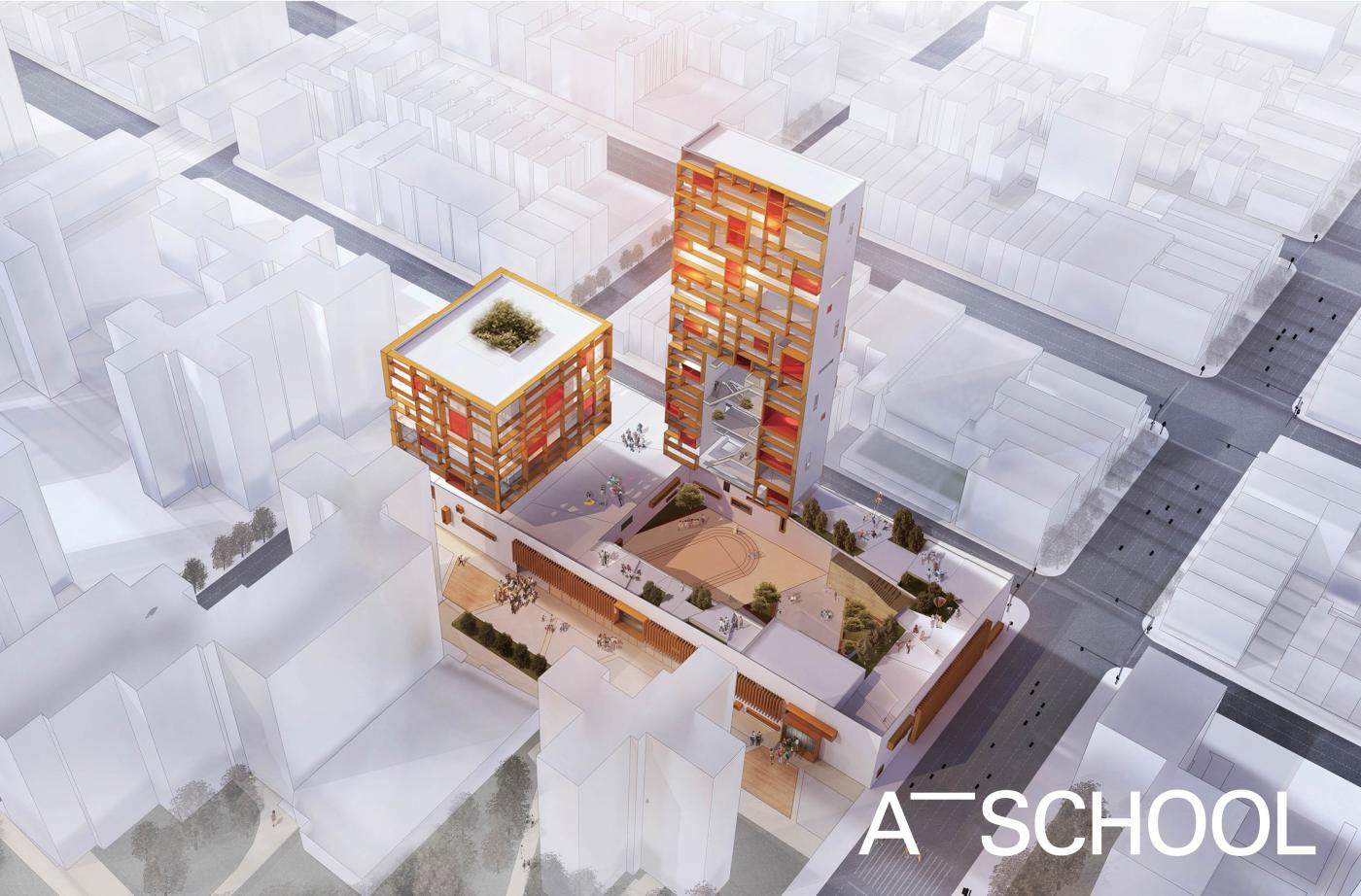
UVA Architecture offers a curriculum that exposes students to the fundamentals of design in order to creatively and critically engage the diverse scales and contexts of the built environment.
FOUNDATIONAL STUDIOS + COURSES:
Foundational studios and courses focus on fundamentals that make up the core of architectural education. This curriculum draws from spatial lessons and challenges nationally and across the globe, bringing together architectural design, building technology, history, and visual studies in order to introduce students to the core fundamentals of architectural education.
RESEARCH STUDIOS:
Advanced students have the opportunity to choose a research studio from a range of spatial topics that are of disciplinary relevance today. Focus research topics at the school include: design + technology, next cities, cultural landscapes, social justice, new ecologies, and design+. Research studio topics over the past several years have ranged from “Design Driven Manufacturing” in the context of Virginia industry to urban and architectural interventions along the “Yamuna River” in New Delhi to mediating extreme environments in the context of “The Arctic Design Group” studio.
SPECIAL TOPIC SEMINARS:
Drawing from faculty research and expertise, special topic elective seminars expose students to a wide range of contemporary approaches to the disciplines of: architecture, landscape architecture, urban and environmental planning, urban design, architectural history, historic preservation, theory, and criticism.
ACADEMIC OPPORTUNITIES
APPLIED RESEARCH PROJECTS + TRAVEL OPPORTUNITIES:
We understand architecture as the broadest possible expression of the built environment and provide students opportunities to engage in applied research with significant forms of impact, including: through research studios and research assistantships, through participation in the school’s research centers, and through the development of an independent thesis project. More information on the school’s research centers can be found here.
We also promote and create global research and travel opportunities for our students, with the recognition that the future of architecture is increasingly global. Direct engagement with the sites and communities we are studying and designing for is a critical part of our curricula. Students travel locally, nationally, and internationally to experience design in-situ, to engage in fieldwork, and to gain a deeper awareness of global cultures. More information on the school’s study abroad programs can be found here.
INTERDISCIPLINARY APPROACHES:
Throughout the architecture curriculum, we build upon strengths as an inherently interdisciplinary community, working both within and across our four departments: Architecture, Landscape Architecture, Urban + Environmental Planning, and Architectural History. As part of a leading research institution, students are given opportunities, through research studios, team-taught courses, and open electives, to engage students and faculty across the university, in partnership with non-profits and other collaborators.
Q: What is the fall application deadline?
A: January 10 at 11:59pm Eastern Standard Time. It is the applicant's responsibility to ensure all application materials are submitted by the application deadline for your application to move forward in the review process. Incomplete applications will not be considered. Return to your application checklist to confirm all required items are submitted.
Q: Is an interview required for admission?
A: Shortlisted PhD candidates will be invited to participate in a brief video interview with members of the PhD admission committee in February. You will be notified by mid-February if you are invited to interview.
While we are unable to interview all other candidates for admission, know that we spend a great deal of time evaluating your application. All components of your application are considered in the decision-making process. As such, we recommend you give time and thought to submitting an application that highlights your strengths.
Q: Is a Master's degree required to apply to the PhD in the Constructed Environment program?
A: Yes.
Q: Do you require a portfolio?
A: A portfolio is required for applicants to the Master of Architecture and Master of Landscape Architecture programs as well as for any applicant interested in pursuing the Urban Design Certificate. Portfolio submissions are optional for applicants to the PhD in the Constructed Environment program.
Q: Should I send a physical copy of my portfolio?
A: No. Upload your portfolio digitally with your application. Do NOT submit a physical copy. (Remember to double-check the formatting of your PDF!)
GRADUATE PROGRAMS PORTFOLIO GUIDELINES
Q: Do you require calculus or physics before entering the MArch program?
A: Calculus and physics are highly recommended prior to entering the MArch program but are not prerequisites for admission.
Q: Can I receive an application fee waiver?
A: UVA School of Architecture students and recent graduates who meet the criteria to apply as a Direct Admit applicant, current UVA School of Architecture graduate students applying for a second degree, and applicants who meet UVA’s eligibility requirements may receive an application fee waiver. The School of Architecture is unable to provide other application fee waivers.
Q: When are admission decisions made, and how will I be notified?
A: Admissions decisions will be posted by early March. You will be notified of our admission decision through the online application platform and via email.
Q: Do you have any part-time programs?
A: No, all of our programs are considered full-time.
Q: May I enroll in the spring semester?
A: We offer admission to the graduate programs for the fall semester only (though some students may be required to begin classes during UVA’s Summer Sessions). Students who would like to take non-degree classes in the spring may be able to take a course through the Community Scholar program, administered by the School of Continuing and Professional Studies.
Q: I qualify for Direct Admit. How do I apply?
A: Direct Admit students complete the same application as our regular applicants and should select "Yes" to the question "Are you applying as a Direct Admit?" applicant. The application will make recommendation letters optional, which are waived for Direct Admit students.
The Student Affairs Office encourages Direct Admit students to submit recommendation letters despite being optional. Recommendations, along with all other application materials, are helpful for awarding merit aid.
Direct Admit eligibility can be confirmed by the Student Affairs Office, email a-school-admissions@virginia.edu for details.
Current and former UVA School of Architecture students who believe they are eligible to apply as Direct Admit applicants must upload to the graduate application proof of Direct Admit eligibility obtained from Tashana Starks, Director of Advising + Academic Support (tdp2m@virginia.edu). We encourage you to contact Tashana Starks at least one week in advance of the application deadline to secure your eligibility proof.
Q: What is involved in applying for two degrees?
A: Applicants interested in pursuing dual degrees must apply for each program separately. Create and submit one application per program, submit one copy of all required materials per program, and submit one application fee per program. Applications will be reviewed independently of each other.
Currently enrolled graduate students seeking a second degree must submit a complete application by the application deadline.
Contact the Office of Admission + Financial Aid at a-school-admissions@virginia.edu with questions about how to apply for dual degrees.
Q: I previously applied to the School of Architecture. Do I need to resubmit an application?
A: Yes, a new application with all applicable information updated is required.
Contact the Office of Admission + Financial Aid at a-school-admissions@virginia.edu with questions about how to reapply.
Q: If I am currently enrolled in another graduate program, may I transfer to your program, and will my credits transfer?
A: If you believe your current school or program is no longer the correct fit for you, we welcome the opportunity to discuss your options at the UVA School of Architecture. Students may apply though the regular admission process and must adhere to all application requirements and deadlines to be considered. If admitted, the Graduate Program Director will determine if you are eligible for advanced standing.
The School of Architecture’s transfer policy is found in the UVA Graduate Record. We strongly encourage you first to seek guidance from the Graduate Program Director of the department in which you are interested in transferring before beginning the application process.
Q: Does my 3-year bachelor’s degree from an international institution qualify me for graduate admission?
A: Graduate admission for international students is contingent on the submission of official transcripts through a NACES-approved credential evaluator. Degree equivalency will be determined by the NACES credential evaluator. The School of Architecture does not determine which international degrees are equivalent to U.S. undergraduate degrees. If you are unsure if your 3-year undergraduate degree is the equivalent of a U.S. bachelor’s degree, we recommend having your academic records evaluated by a NACES member organization.
Q: Which program Path am I eligible for in the Master of Architecture program?
A: All applicants, regardless of undergraduate degree, will be reviewed by faculty for advanced placement. Applicants with undergraduate degrees in Architecture have historically been more likely to be admitted to Path 2, but advanced placement is not guaranteed.
Students will not select a path on the application, as all applications will be reviewed to be placed in the appropriate Path. The program Path will be included in the acceptance letter for students admitted to the program, released in early March.
If you would like feedback on your undergraduate degree in relation to our program Paths, then contact the Student Affairs Office at a-school-admissions@virginia.edu.
Q: Which program Path am I eligible for the Master of Landscape Architecture program?
A: All applicants, regardless of undergraduate degree, will be reviewed by faculty for advanced placement. Applicants with undergraduate degrees in Landscape Architecture have historically been more likely to be admitted to shorter paths, but advanced placement is not guaranteed.
The program Path will be included in the acceptance letter for students admitted to the program, released in early March. While advanced placement is not guaranteed by any of the criteria below, apply to the Path that fits your educational background the most:
MLA Path 2 Advanced –
Bachelor of Landscape Architecture or Bachelor of Science in Landscape Architecture from a LAAB or LAAC accredited program
MLA Path 2 –
Bachelor of Architecture degree from a NAAB accredited program
MLA Path 2.5 –
Landscape Architecture degree (or equivalent) that is not LAAB or LAAC accredited
Architecture degree (or equivalent) that is not NAAB accredited
MLA Path 3 –
Non-Landscape Architecture or non-Architecture degree
If you still have questions about which Path your educational background typically enrolls in, contact the Student Affairs Office at a-school-admissions@virginia.edu.
Q: What is the minimum GRE required to apply?
A: The School of Architecture has suspended the GRE requirement through the 2027 admission cycle. Applicants will not report GRE scores on the application, nor will admitted students be required to submit official GRE scores.
Q: I need to send official test scores to your school. What is your institution code?
A: Official test scores are only required of applicants who are offered admission to the School of Architecture. Applicants may self-report unofficial test scores on their applications. The institution code for the TOEFL is B875.
Q: Do you require TOEFL or IELTS from international students?
A: All international applicants whose first or native language is not English are required to submit proof of language proficiency by submitting qualified TOEFL or IELTS scores, taken within two years of the application deadline. Students who have earned a 4-year bachelor’s degree (or master's degree for PhD applicants) entirely from an institution where English is the primary language of instruction are not required to submit TOEFL or IELTS scores. You will note this exemption on your online application.
TOEFL MINIMUMS: 250 (computer-based) or 90 (internet-based)
[The School of Architecture prefers a minimum of 100 for the internet-based exam for a student's success in the program.]
IELTS MINIMUM: 7.0 overall band score
Applications will not be considered without qualifying TOEFL or IELTS scores received by the application deadline.
The School of Architecture does not accept MyBest TOEFL scores.
Q: Can I take a required test after the application deadline?
A: No. Applications must include all required qualified test scores by the application deadline.
Q. How many letters of recommendation are required?
A: Three (3) recommendations are required. Recommender information will be entered on the application and the recommender will receive an email with instructions for submitting their reference. Applicants may not submit references on their recommender's behalf.
Q: What is the deadline for letters of recommendation? Can I submit my application before one or more of my recommenders has submitted their letter of reference?
A: Recommenders are strongly encouraged to submit letters of recommendation by the January 10 (11:59 PM EST) deadline, but the School of Architecture will continue to accept letters of recommendation through January 17 (11:59 PM EST). Recommendations submitted after January 17th will not be considered.
Recommendation requests will be automatically emailed to recommenders as soon as their information is entered and saved in the online application. Applicants do not need to submit a complete application to generate the recommendations requests.
The online application system is able to receive references before or after an application is submitted.
Q: If a recommender is having technical issues with the application system, is there another way to submit their recommendation?
A: If the submission link sent to a recommender is not working properly, recommenders should contact the UVA Central Graduate Admission Office at garchadmission@virginia.edu for assistance.
Q: What is the full cost of attending UVA?
A: The School of Architecture’s tuition, fees and cost of living are among the lowest of our peer institutions. Refer to our Tuition + Funding webpage for more information.
Q: Am I eligible for scholarships and fellowships?
A: All graduate applicants, including international students, are automatically considered for departmental merit-based aid as part of the application review process. No separate funding applications are required.
Master's applicants may also apply through the graduate application for one of our DEI scholarships and/or Historic Preservation Certificate scholarships. Details for how to apply for these scholarships are found on our graduate application instructions web page.
U.S. Citizens and Permanent Residents are also eligible for Federal Financial Aid. Visit the Student Financial Services website for federal aid application instructions.
Q: How do I become a Virginia resident?
A: If your primary reason for moving to Virginia is for education, you will likely not be granted in-state residency.
Contact the UVA Office of Virginia Status with questions about Virginia domicile.
Q: Which programs are STEM-designated?
A: The Master of Architecture and Master of Landscape Architecture programs are STEM-designated and qualify graduates for extended Optional Practical Training (OPT). For more information please follow the links below.
STEM DESIGNATION FOR M ARCH PROGRAM
STEM DESIGNATION FOR MLA PROGRAM