
ABOUT THE NETWORKED PUBLIC SPACE —
Funded by the University of Virginia Strategic Investment Fund, Networked Public Space (NPS) is a collaborative of designers, planners, engineers, social scientists, and community stakeholders. NPS addresses the planning and design of networked public spaces, with a focus on human experience. NPS seeks to facilitate social interaction and human development rather than focus on infrastructural efficiencies. To do so, NPS defines "networked public space" not just as public space with embedded network and sensor technologies, but an interactive network of people, places, and technologies. The collaborative supports social, political, and technical action based on open data and analysis.
PRINCIPAL INVESTIGATORS —
Mona El Khafif, Associate Professor, Architecture and Urban + Environmental Planning [me9gn@virginia.edu]
Andrew Mondschein, Associate Professor, Urban + Environmental Planning [mondschein@virginia.edu]
Luis Felipe Rosado Murillo, Research Associate
RECENT RESEARCH PROJECTS AT NPS —
MAKING THE INVISIBLE VISIBLE
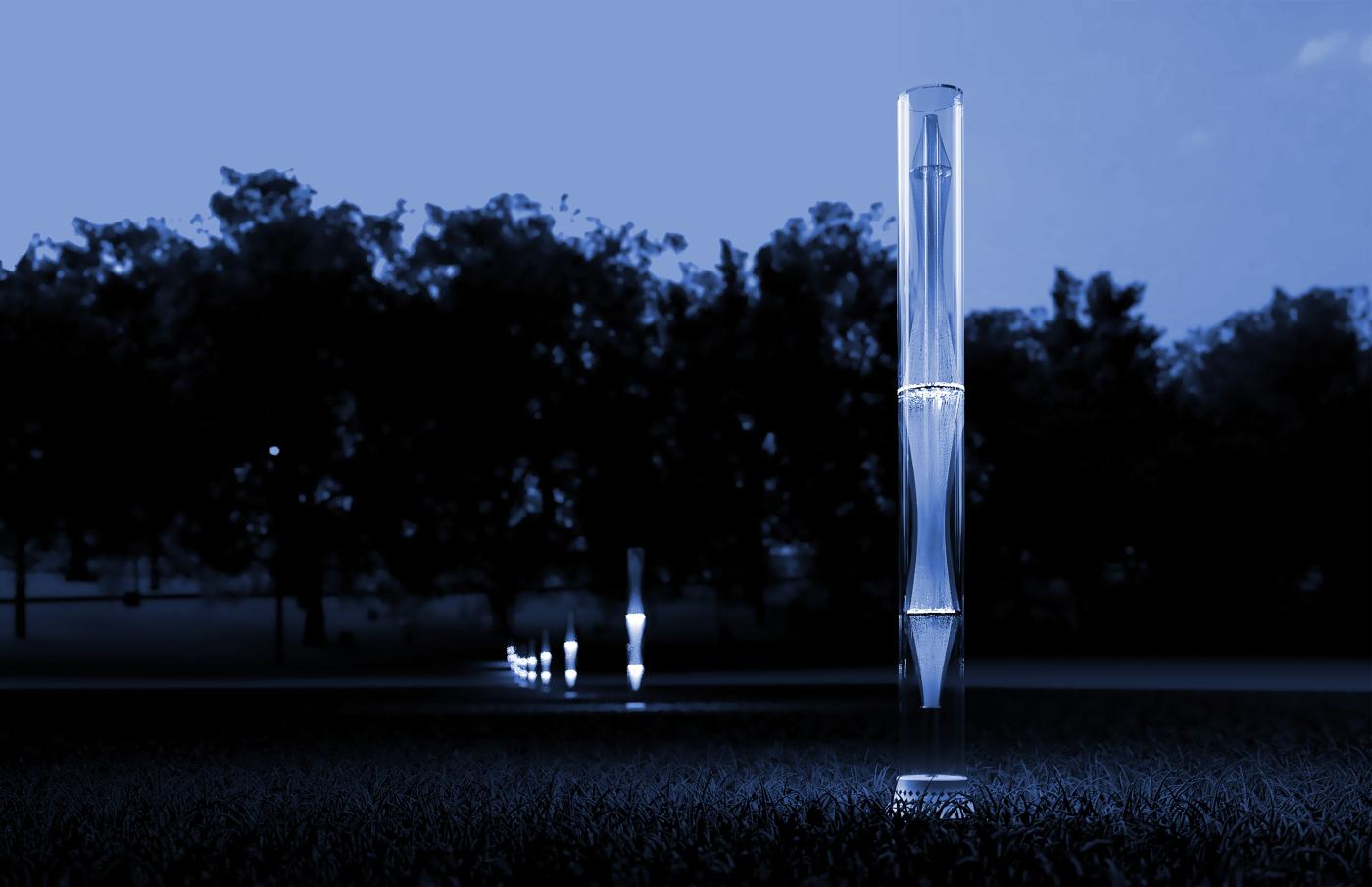
On the evening of Monday October 10, 2022, Networked Public Space participated in the 20th Annual Gabriel Gathering: Making the Invisible Visible, organized by The Sacred Ground Historical Reclamation Project of the Virginia Defenders for Freedom, Justice & Equality. NPS’s environmental sensing installation, part of this event, measured air pollution and sound levels on the African Burial Ground located in Richmond, VA, in real-time, responding to conditions on site with changes in lighting, and also uploading the data for visualization online. These responsive “sculptures” supported the ongoing environmental justice issues into conversation with the work of Sacred Ground and Recontextualizing Richmond. They highlighted the history of the African Burial Ground that extends to its conditions today, from the erasure of “urban renewal” and construction of I-95 to ongoing air and noise pollution on the site. The work aims to use open-source sensing technologies and community engagement strategies to make urban environmental data more accessible, meaningful, and actionable for communities.
Project Managers: Davis Eddy, Darcy Engle
Project Team: Seshi Konu, Marian Roshdy, Ali Sareini, Cara Hu, Wesley Jonah Lewis, Teagan Le (2020-2021), Pryce Derek Foyt, Gabe Andrade (2019-2020), Brian Kusiak (2020-2021)
Community Partners: Center for Civic Innovation (Charlottesville, Virginia), Belmont-Carlton Neighborhood Association (Charlottesville, Virginia), Jefferson Area Board for Aging (Charlottesville, Virginia), C4K (Charlottesville, Virginia), City of Richmond, Virginia, Sacred Grounds Historical Reclamation Project (Richmond, Virginia), UntoldRVA (Richmond, Virginia)
Learn more about this project.
TIME SPACE EXISTENCE
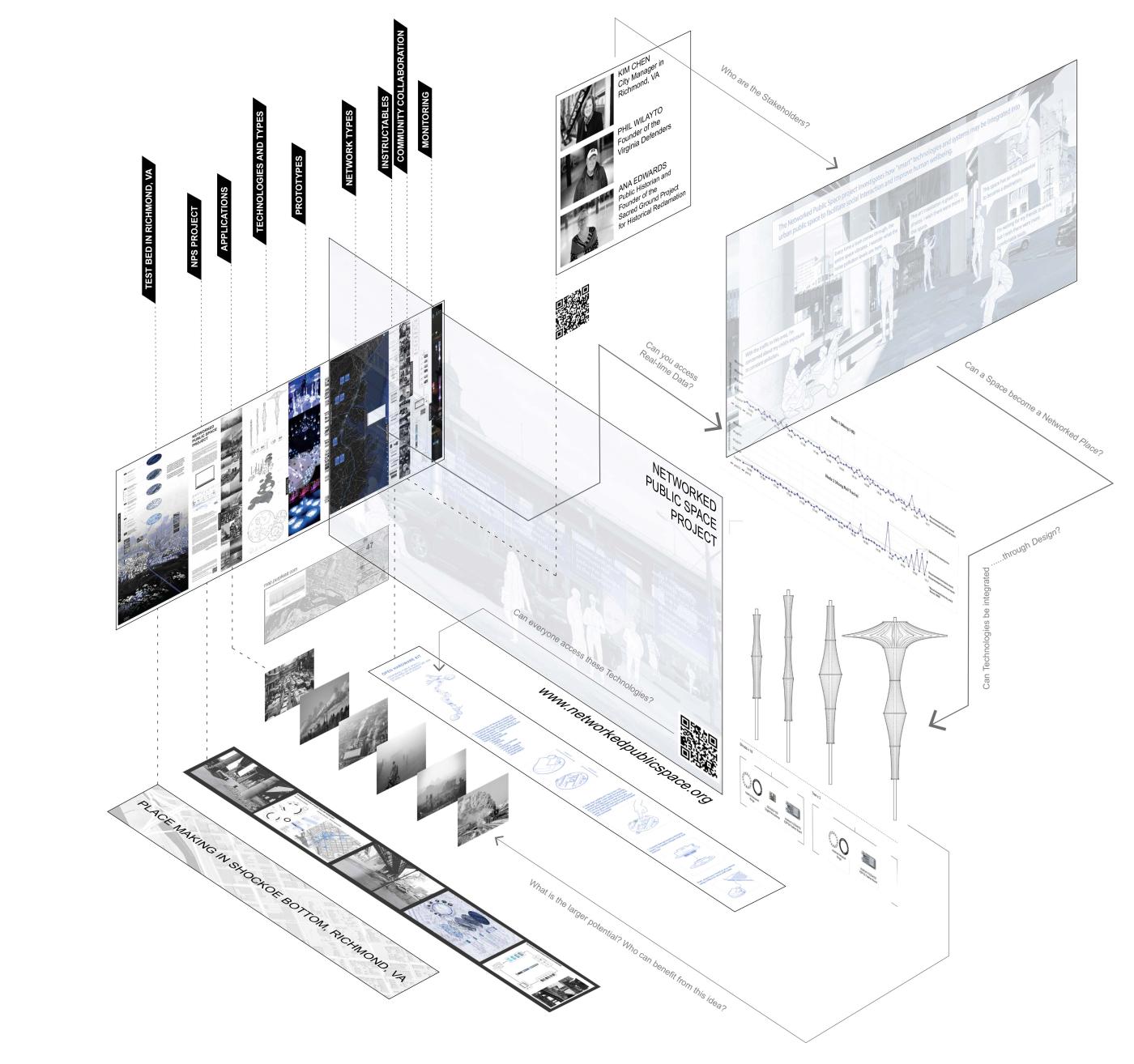
On view at the Palazzo Mora in Venice from May – November 2023 is the work of Networked Public Space. NSP participated in the sixth edition of Time Space Existence, an international exhibition on display at the home of the European Cultural Centre (ECC) — the exhibition features an international group of architects, artists, academics, and creative professionals who are exploring “emerging expressions of sustainability.” As part of the exhibition NPS contributes to a diverse body of design work that addresses social justice through various strategies, which the exhibition curators describe as, “examin[ing] the tensions between the built urban environment and the nature surrounding it…[while] establishing a dialogue with local culture.” While the NPS project showcased in the exhibition used Richmond, Virginia as a testbed, it presents an approach that can be adapted for other applications or sites with different communities. NPS is not a traditional design project, but a system, including different interfaces: an online dashboard, instructables, a website, and recorded interviews. Together this designed system can amplify the vision and objectives of communities and longstanding activists working on social and environmental transformation.
Exhibition Design: Mona El Khafif, Darcy Engle, Marian Roshdy
RESEARCH AFFILIATIONS + COLLABORATORS —
Our affiliated research partners and collaborators include resident and institutional stakeholder groups who work with us to develop flexible, responsive architectures and infrastructures in local public spaces.
Center for Civic Innovation
Sacred Ground Historical Reclamation Project
Untold RVA
NPS is made possible with support from the National Science Foundation S&CC grant # 1737581.
ABOUT THE NATURAL INFRASTRUCTURE LAB —
The Natural Infrastructure Lab (NIL) works to develop innovative and culturally significant forms of coastal and riverine infrastructure through landscape design research. We partner with governmental, non-profit, and private entities to focus on the potential of plants, sediments, currents, waves, rocks, and the historical and contemporary human practices that engage them to deliver the services society relies on, including coastal resilience, landscape migration, and flood protection. Our research products work across scales and provide partners with the concepts, forms, and data-driven insights needed to implement innovative natural infrastructure that enhances human and ecological health over time.
LAB DIRECTORS —
Brian Davis, Associate Professor, Landscape Architecture [mudlands@virginia.edu]
Michael Luegering, Assistant Professor, Landscape Architecture [ml6wb@virginia.edu]
LAB RESEARCH STAFF —
Emma Potter, Project Associate for UPWINS [hgt8zy@virginia.edu]
Adrian Robins, Research Specialist [adrianrobins@virginia.edu]
Ruby Zielinski, Program Manager [fjw2zm@virginia.edu]
CURRENT RESEARCH PROJECTS AT NIL —
PRESERVING COASTAL PARKLANDS
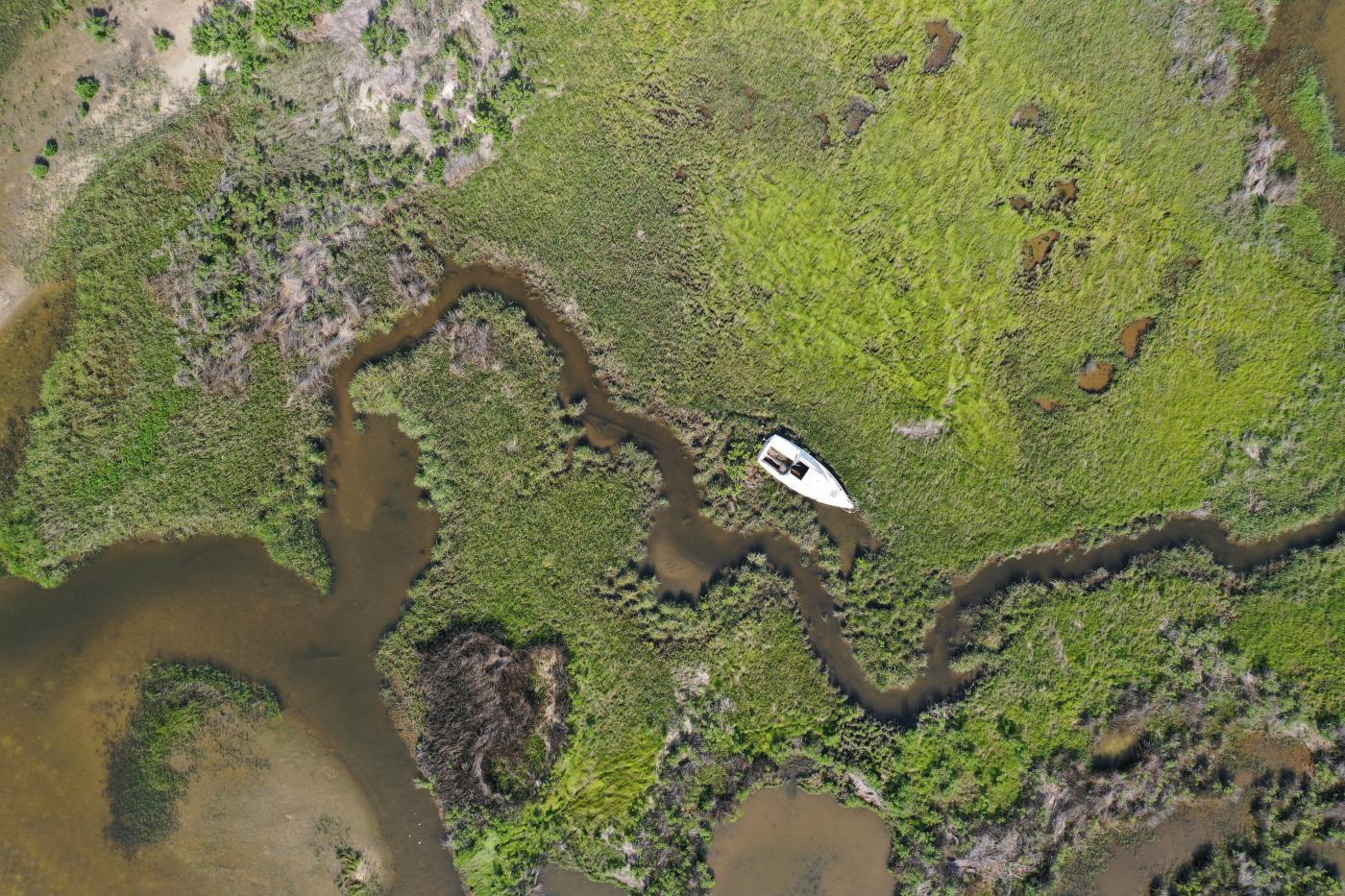
In collaboration with the National Park Service (NPS), The Nature Conservancy, and ETZ Strategies, the Natural Infrastructure Lab is partnering on Preserving Coastal Parklands supported by the U.S. Army Corps of Engineers (USACE) and their Engineering with Nature (EWN) Program for a three-year site-based research project to develop and test Natural and Nature-Based Features (NNBFs) for three coastal national parks in the Chesapeake Bay region: Colonial National Historic Park (NHP), Harriet Tubman Underground Railroad National Historical Park (HATU), and Assateague Island National Seashore (ASIS). Together, the parks represent a range of environments and issues facing coastal parks in the Chesapeake Region more broadly. The team will work to develop NNBF designs that provide natural alternatives to flood control and other landscape management needs of these coastal parks and their associated communities. The project aims to preserve the natural and cultural resources of the parks that are valued for their capacity to provide enjoyment, education, and inspiration for current and future generations that are under threat from sea level rise.
Project Team: Brian Davis (UVA, Landscape Architecture), Erin Putalik, PhD (UVA, Architecture and Landscape Architecture), Michael Luegering (UVA, Landscape Architecture)
Collaborators: Cathy Johnson (National Parks Service), Jackie Specht (The Nature Conservancy), Isaac Hametz (ETZ Strategies), Jeff King (Engineering with Nature)
Researchers: Marantha Dawkins (PhD in the Constructed Environment), Adrian Robins (MLA '24), Alex Daley (MLA '24), Yi Zhu (MLA '23)
Funding: $540,000
Partners: EWN, NPS, TNC, ETZ Strategies
URBAN PLANNING WITH INTEGRATED NATURAL SYSTEMS (UPWINS)
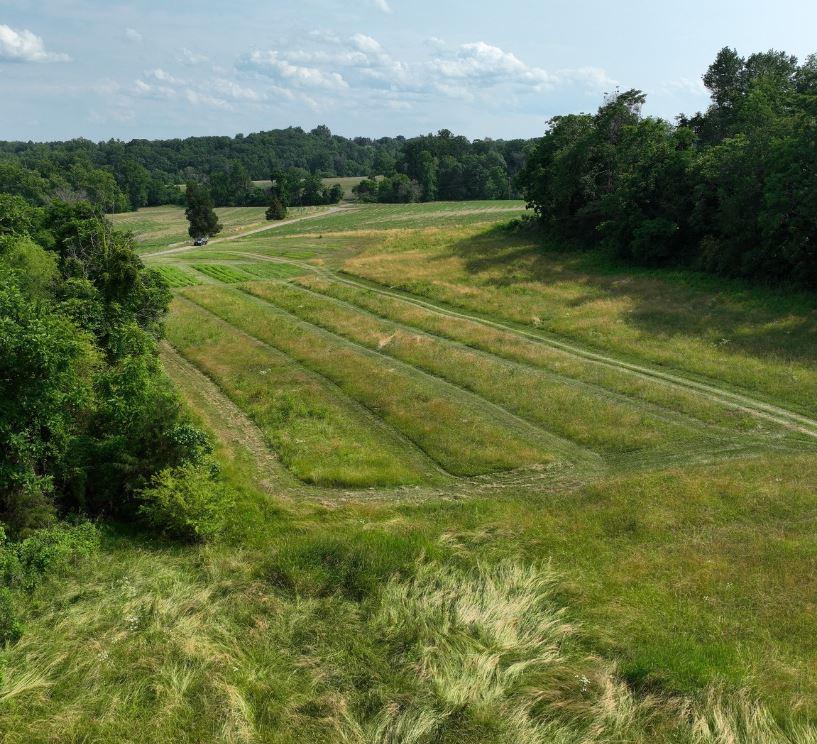
Urban Planning with Integrated Natural Systems (UPWINS), is an early-stage applied Research and Development project focusing on the development of monitoring and adaptive management techniques for nature-based infrastructure. Using both lab and field-scale trials, the project is developing accessible methods of plant and soil manipulation to encourage plant migration and growth that can engage the accelerating, critical aspects of riverine and coastal environments such as erosion and saltwater intrusion. Further, these trials pair with extremely frequent spectral and geometric collections from the plants using multiple scales of terrestrial and remote sensing. This data collection serves as the backbone of our data science approach to nature-based infrastructure monitoring, in which we seek to develop fundamental spectral signatures that can track the growth and change of key indicator species at large scales. Both sets of techniques are applied to sites within the Chesapeake Bay Region to verify the efficacy and impact of the research.
Project Team: Michael Luegering (UVA, Landscape Architecture), Bill Basener (UVA School of Data Science), University of Vermont, Spatial Analysis Lab, Chris Miller (United States Department of Agriculture – NRCS), Michael Tantala (Tantala Associates/ City College of New York), Peter Del Tredici (Arnold Arboretum)
Funding: $3.25M, United States Army Corps of Engineers – Engineering Research and Development Center; Engineering With Nature
In the News:
UVA School of Architecture
UVA Today
NATURAL INFRASTRUCTURE INNOVATION PROJECT (NIIP)
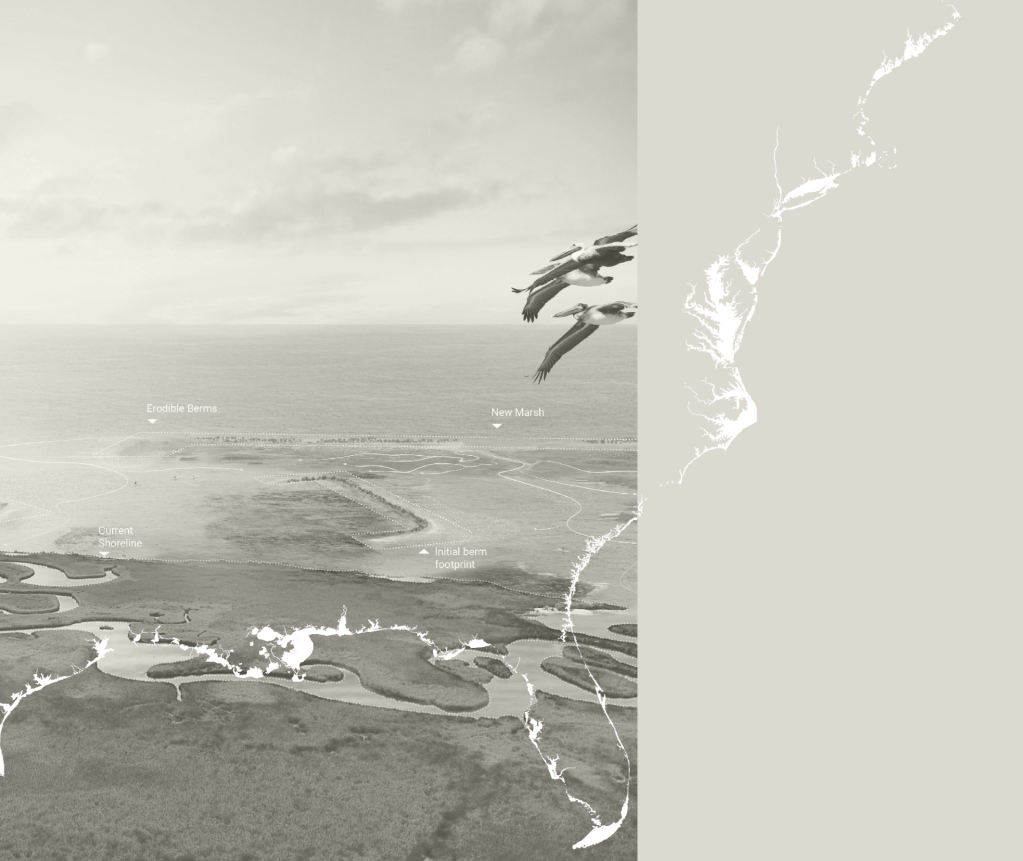
A newly formed collaboration brings together researchers and designers to study, develop, and pioneer new forms of natural infrastructure, approaches that use nature to address the challenges related to sea-level rise, erosion, flooding, and habitat loss in the nation’s bays and estuaries. For the Natural Infrastructure Innovation Project (NIIP), Davis leads a research team, based at UVA, that is studying and identifying best practices and future solutions in natural infrastructure for the mid-Atlantic and Southeast United States’ bays and estuaries. Partner labs at the University of Pennsylvania and Auburn University are studying the Northeast and Gulf Coast regions, respectively, stitching together a wide geographic range to be able to share findings with landscape architects and engineers across the country.
This project is helping to assess how maintaining and restoring natural infrastructure to support healthy functioning can save money, time, and lives in both the short and long-term future. Support from the U.S. Army Corps of Engineers, that has purposely incorporated natural processes and nature-based features into some of its flood-control projects through the Engineering With Nature (EWN) program for over a decade, allows for economic, environmental, and social benefits — enhanced by collaborations between engineers and landscape architects.
UVA Project Team: Brian Davis (UVA, Landscape Architecture), Adrian Robins (UVA, NIL), Ruby Zielinski (UVA, NIL)
Funding: $7.75M, United States Army Corps of Engineers – Engineering Research and Development Center; Engineering With Nature
Project Website:
https://tidelands.us/
In the News:
UVA School of Architecture
Brian Davis on the EWN Podcast "Engineering with Nature"
FOUR COASTS
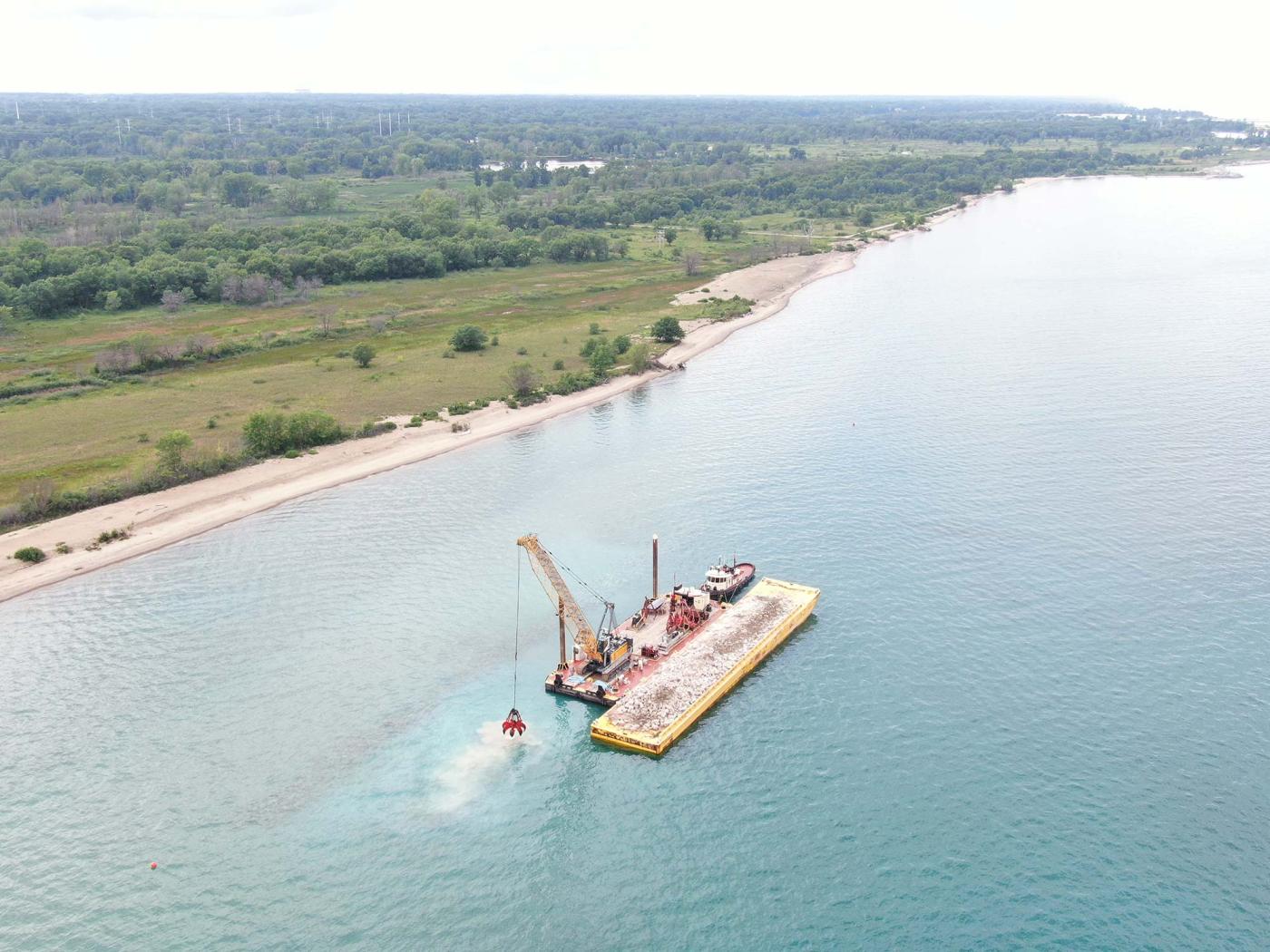
Four Coasts is a collaboration with members of the Dredge Research Collaborative, Anchor QEA, and local communities that seeks to develop landscape architecture approaches to enhance natural infrastructure concepts related to the four coasts of the continental Unites States. The project is funded through the U.S. Army Corps of Engineers (USACE) and their Engineering with Nature (EWN) Program with assistance from the San Francisco, Mobile, Philadelphia, and Great Lakes districts of the USACE. The project will take place over two years and is intended to accompany a decision tool developed in collaboration with Anchor QEA. Levee setbacks, beneficial use of dredged sediment, tidal flats, and dune enhancement, in conjunction with community needs and ecological health, are some of the design research concepts under development. The Natural Infrastructure Lab brings unique modeling capabilities as well as theoretical development to Four Coasts, and is focused on the San Francisco and Great Lakes regions in particular.
Project Team: Brian Davis (UVA, Landscape Architecture)
Collaborators: Sean Burkholder (UPenn), Rob Holmes (Auburn), Tess Ruswick (US Army Corps of Engineers ORISE fellow)
Researchers: Amy Schulz (MLA '23), Sean Kois (MLA + MArch '23)
Partners: EWN, San Francisco District (USACE), UPenn, Auburn
SUPPORTED COURSES —
The Natural Infrastructure Lab supports the EcoTech course sequence in the Department of Landscape Architecture connecting curriculum and research. These courses include:
LAR 6220 - EcoTech II:
This course establishes a foundation of technical knowledge about the physical + performative characteristics of traditional building materials and emerging alternatives related to landscape architecture.
LAR 7220 - EcoTech IV:
This course investigates earthwork and construction methods that integrate the principles of water and land, with an emphasis in self-remediation, bioengineering, living systems and management.
RESEARCH AFFILIATIONS —
Our affiliated research partners are also leading innovative work in the areas of coastal resilience, cultural landscapes, natural infrastructure, landscape migration, and vernacular landscapes:
Healthy Port Futures
UVA Batten School
Rural Design Bureau
School of Architecture faculty conduct research across a range of disciplines, methods, and modes of dissemination. When faculty seek to participate in funded research, the School of Architecture’s Research Administration team assists faculty with the development and submission of grant proposals and the management of awarded grants. The Research Administration team supports both external (outside UVA) grant and fellowship submissions as well as internal proposals. We also support the day-to-day administration of funded projects to ensure compliance with University, state, federal, and sponsor guidelines and regulations.
Your first step is to develop an idea for a research project that you believe worthy of funding. You can do this on your own, with colleagues at the A-School, other University of Virginia schools, or other institutions. If you decide to move forward with developing a proposal, you should inform your Department Chair or Center Director and consult with her/him about such matters as the potential need for space, other departmental support, staff support, or course release (i.e., buy-out) from teaching. If you are unsure if you are eligible to act as a Principal Investigator on a research project at UVA, please email sarc-research@virginia.edu.
Faculty are invited to set up time to meet with the Associate Dean of Research, Andrew Mondschein, to share their research interests and discuss research opportunities within the School, the University and beyond (On Leave Academic Year 25-26). The Associate Dean of Research shares regular communications about research resources made available to our faculty, including internal and external funding opportunities, workshops, and other research-related opportunities within and outside the A-School. The Associate Dean of Research is also the primary point of contact for any questions you have about using your research funds to hire an A-School student as a research assistant (SRA). While our Associate Dean of Research is on leave for AY25-26, please reach out to sarc-research@virginia.edu.
QUESTIONS: Please email sarc-research@virginia.edu for any questions you have about research or for support requests, including:
-
New proposals and contracts, including budget development
-
Resubmissions and renewals
-
Initial at-risk account set-up
-
Subawards
-
Data Use Agreements, MOUs, material transfer agreements, etc.
-
Rebudgeting
-
PI exception requests
-
Progress reports and continuations
-
No-cost extensions/at-risk account extensions
-
Post-award financial management issues
-
Labor Distribution issues/oversight
-
Oversight of effort reporting
The School of Architecture's Faculty Council establishes academic and faculty policies necessary to achieve the mission of the School of Architecture and to promote activities that enhance the programs of the School and the mission of the University.
Current members —
Mona El Khafif, Chair / Department of Architecture Representative (through end of July 2026)
Michael Lee, Department of Landscape Architecture Representative (through end of July 2027)
Andrea Roberts, Department of Urban + Environmental Planning Representative (through end of July 2027)
Lisa Reilly, Department of Architectural History Representative (through end of July 2027)
Nana Last, Full Professor Representative (through end of July 2027)
Katie MacDonald, Assistant Professor Representative (through end of July 2026)
Schaeffer Somers, General Faculty Representative (through end of July 2027)
John Comazzi, Ex-Officio Dean's Office Representative
A-SCHOOL FACULTY GOVERNANCE RESOURCES:
— Faculty Bylaws (Last Updated December 2024)
— Faculty Council Charge
— Faculty Representatives on Committees
A-SCHOOL FACULTY REVIEW + PTR RESOURCES:
— Faculty Annual Review Process
— Promotion, Tenure + Reappointment Policy
FACULTY POLICIES:
— Academic Policies
— School of Architecture General Faculty Policy
— Faculty External Consulting + Internal Overload
— Faculty Leave Policy
— Faculty Appointments, Types + Titles
Fall 2026
Dates TBD
Application (Opening Soon) Deadline: March 1, 2026
Learn More and Apply
Upcoming Information Session
If you are interested in applying the Venice Fall 2026 Program, join faculty director William Sherman and Professor of Landscape Architecture Bradley Cantrell for a forthcoming information session.
— Wed. Feb. 11, 5pm - 6pm, Campbell Elmaleh Gallery + Bishop Conference Room
Virtual Information Session Recording
This virtual information session took place on December 1, 2025.
TIMESTAMPS:
Greece: 00:01:49 - 00:14:31
Barcelona: 00:15:13 - 00:28:58
Venice: 00:29:12 - 00:43:52
Vicenza: 00:44:06 - 00:54:03
General Information about Study Abroad, the Application Process, and Financial Aid: 00:54:07 - 01:12:13
The Venice Program offers a unique collaborative experience: the study of a centuries-old relationship between dwelling, the land, and in this case, the water. Being immersed in the daily rituals of a foreign culture and in material, spatial constructs takes an unparalleled hold on the imagination. In a one-semester, fifteen-credit curriculum, the students retrace the urbanization of Venice and the Veneto, attend lectures and visit examplars of the development of Venetian art and architecture, conduct independent research and participate in a design studio. The Venice program’s focus on strategies for resilience in dynamic settings is grounded in an understanding of landscape processes, the multiple histories embodied in the cities, buildings and art, and the cultural structures that enable communal life. The complexities of building and rebuilding a city in a preposterous landscape emerge again as contemporary challenges operate at nested scales of daily life, material constructs and landscape systems.
The School of Architecture has a longstanding connection to Venice and the Veneto, initiated by the late Professor Mario di Valmarana over 40 years ago. As a commitment to Mario’s legacy, the school has continued the program through the generosity of alumni who have funded numerous student scholarships and the Mario di Valmarana Professorship. The semester-length program in Venice builds upon this deep tradition to offer the students of the School of Architecture the opportunity for immersion in the rich art, architecture, and landscape of the unfathomable cultural life of Venice.
Venice must be understood in relation to its landscape, where its land-water conflation dictates its unique urban form and systems, where its watery existence may find application around the globe. In its relationship to the Adriatic Sea, Venice offers the chance to study the ever-increasing risks posed to coastal urban centers as evidence of climate change and impactful land development. The Venice program explores how well-considered design analyses and interventions, from urban and infrastructural strategies to detailed building and landscape proposals, could imagine more resilient forms of inhabitation. Since its origins, Venice has been a key nodal point in a wide Mediterranean network, a center for mercantile, artistic, and architectural exchange. Long heralded as a major center of the international art and contemporary architecture world being host to the art and architecture Biennale, Venice is a cultural laboratory where the program has found a home for inspired design experiments and inventive scholarly research.
The program is open to fourth year undergraduates and final year graduate students of all of the disciplines of the School of Architecture. Following three weeks of structuring a research focus and initiating urban analysis in Charlottesville, the students embark on a six-week residence in Venice from mid-September to the end of October. Upon their return, students apply lessons from Venice in an immersive design studio or independent study.
DESIGN TRACK
ARCH 4010, ALAR 8010: Design Research Studio (6 cr)
ALAR 5203: Building Venice (3 cr)
ALAR 5403: Venice: City and Landscape (3 cr)
ARH 5201: Art and Architecture of Venice (3 cr)
RESEARCH TRACK FOR URBAN PLANNING + HISTORY STUDENTS
ARH 5993 or PLAN 5993: Independent Research (6 cr)
ALAR 5203: Building Venice (3 cr)
ALAR 5403: Venice: City and Landscape (3 cr)
ARH 5201: Art and Architecture of Venice (3 cr)
William Sherman | whs2b@virginia.edu
Program Director, Mario di Valmarana Professor, Architecture
Erin Putalik | esp2s@virginia.edu
Program Instructor, Assistant Professor, Architecture and Landscape Architecture
Monica Shenouda | mas5ms@virginia.edu
Lecturer, Architectural History and Architecture
The core faculty will also be supported by an exciting group of visiting faculty from Venice and the Veneto.
Fall 2026
August 29 - December 1, 2026
Application Deadline: March 1, 2026
Learn More and Apply
Information Session
If you are interested in applying to the Barcelona Program, join faculty director Manuel Bailo for an upcoming information session.
Fri. Feb. 13, 10am - 11am, Location TBA
Virtual Information Session Recording
This virtual information session took place on December 1, 2025.
TIMESTAMPS:
Greece: 00:01:49 - 00:14:31
Barcelona: 00:15:13 - 00:28:58
Venice: 00:29:12 - 00:43:52
Vicenza: 00:44:06 - 00:54:03
General Information about Study Abroad, the Application Process, and Financial Aid: 00:54:07 - 01:12:13
Experience the rich architectural and urban design histories of one of Spain’s largest cities. Through coursework, excursions, and daily life, this exciting program provides graduate students an invaluable opportunity to look closely at the critical issues of urbanization, including population densities, environmental impacts, and infrastructural efficacies, affecting the viability of cities in the 21st century.
The main goal of this program is to dive deep into urban investigation in the laboratory that Barcelona constitutes. Using existing academic and institutional networks, participants will have the chance to access the most exceptional places in the city and personally meet important administrators, planners and designers of Barcelona.
See the program in action! Check out the UVA Architecture: Barcelona Instagram.
COURSES
This series of courses fulfills an equivalent semester for School of Architecture graduate students at UVA School of Architecture, Landscape Architecture and Urban and Environmental Planning as well as 4th-year undergraduate students in Architecture and Urban and Environmental Planning.
These course offerings also fulfill the Urban Design Certificate offered at the School of Architecture. Participants will be considered in an individual basis under the advice and permission of the chair of the department.
Track for design students:
ARCH 4010, ARCH 4011, or ALAR 8010: Studio (6 cr.)
PLAN 5611: Barcelona Urban History (3 cr.)
ARH 5613: A Design Process — Gaudi's Origin and Legacy (3 cr.)
ARCH 5605: Urban Materiality — the Construction of the Public Space (3 cr.)
The following students will also be required to take an additional 3-credit course for a total of 18 credits:
-
Undergraduate Architecture students will also be enrolled in ARCH 4100 Design Research Seminar
-
Master of Architecture or Master of Landscape Architecture students pursuing a thesis will also be enrolled in ALAR 8100 Thesis I
Track for non-design students:
PLAN 7010: Research Studio (3 cr.)
PLAN 5611: Barcelona Urban History (3 cr.)
ARH 5613: A Design Process — Gaudi's Origin and Legacy (3 cr.)
ARCH 5605: Urban Materiality — the Construction of the Public Space (3 cr.)
ARH/PLAN 5993: Independent Studies in Architectural History/Applied Independent Study (3 cr.)
Select Course Descriptions:
ALAR 8010 Research Studio
6 credits, 9 hours once a week
The studio will be based on resolving an urban project in the city of Barcelona. This exercise will require landscape, urban and architectural strategies. Working in a complex urban area will force the exercise to go beyond simple object design. The goal of the studio is to design a mix-used building incorporating urban relations, public spaces, and infrastructures. The class will study and visit some buildings and urban design precedents in the city of Barcelona.
ARH 5613 A Design Process. Gaudi’s Origin and Legacy
3 credits 2.5 hours once a week
Gaudi is one of the best known Catalan architects from Barcelona. He is famous for his buildings and his furniture, but he is not known as an urban designer. This class will introduce the students to understanding the city scale in terms of Materiality. It will be apparent by looking at Gaudi’s work how important it is to understand the laws of construction and framework for creating a good design. The students will recognize Gaudi’s legacy in Catalan architecture based on austerity and absurdity.
PLAN 5611 Barcelona Urban History
3 credits, 2.5 hours once a week
The students will understand the history of Barcelona from its Roman foundation to the extension of its medieval walls. The development of its urban structural grid, example of Cerdà, as well as its current state of remodeling for the Olympic games, and the ongoing urban transformations will all be studied in this class. This course will consist of lectures, field trips, and practical exercises; specifically, we will develop a graphic interpretation of different urban studies cases in Barcelona.
ARCH 5605 Urban Materiality. The construction of the Public Space
3 credits, 2.5 hours once a week
This class will introduce students to understand the city scale and landscape design in terms of materiality. The students will learn how to use the materials to resolve urban and landscape issues.
PREREQUISITES
MArch, MLA or dual degree program graduate students will follow the prerequisites set by the curricular sequence of each respective program. Other interested graduate students should contact Professor Bailo. The program has some spots open to fourth year undergraduate students.
Manuel Bailo, PhD
Professor and Program Director
Manuel Bailo Esteve, Ph.D., is Professor of Architecture and Director of the School's Barcelona Program. He founded BAILORULL ADD+ in Barcelona in 1995 with Rosa Rull. Their work includes a wide range of projects, from urban scale to interiors. Bailo's 14 years teaching at the Urban Design Department at the Escola Tecnica d’Arquitectura de Barcelona and his Ph.D. research “Urban Catalyst” makes him as a specialist on how public space is activated. He has taught at UVA School of Architecture since 2013.
- Josep Bohigas architect
- Jaime Coll PhD architect
- Manuel Gausa PhD architect
- Vicente Guallart architect
- Pep Llinàs architect
- Enric Massip PhD architect
- Zaida Muxí PhD architect
- Javier Peña architect
- Carme Pinós architect
- Jose Miguel Roldan architect
- Enric Ruiz Geli architect
- Amadeu Santacana PhD architect
- Bendetta Tagliabue architect
- Elias Torres PhD architect
- Jose Maria Torres Nadal PhD architect
- Antonio Sanmartin architect
ABOUT BIOPHILIC CITIES —
As a central element of its work, Biophilic Cities facilitates a global network of partner cities working collectively to pursue the vision of a natureful city within their unique and diverse environments and cultures. Network partners are working in concert to conserve and celebrate nature in all its forms and the many important ways in which cities and their inhabitants benefit from the biodiversity and wild urban spaces present in cities. Biophilic Cities acknowledges the importance of daily contact with nature as an element of a meaningful urban life, as well as the ethical responsibility that cities have to conserve global nature as shared habitat for non-human life and people.
DIRECTORS —
Founder and Executive Director: Tim Beatley, Teresa Heinz Professor of Sustainable Communities, Urban and Environmental Planning [tb6d@virginia.edu]
Program Director: JD Brown [jdbrown@biophiliccities.org]
BIOPHILIC CITIES' CURRENT RESEARCH RESOURCES —
BIOPHILIC CITIES NETWORK
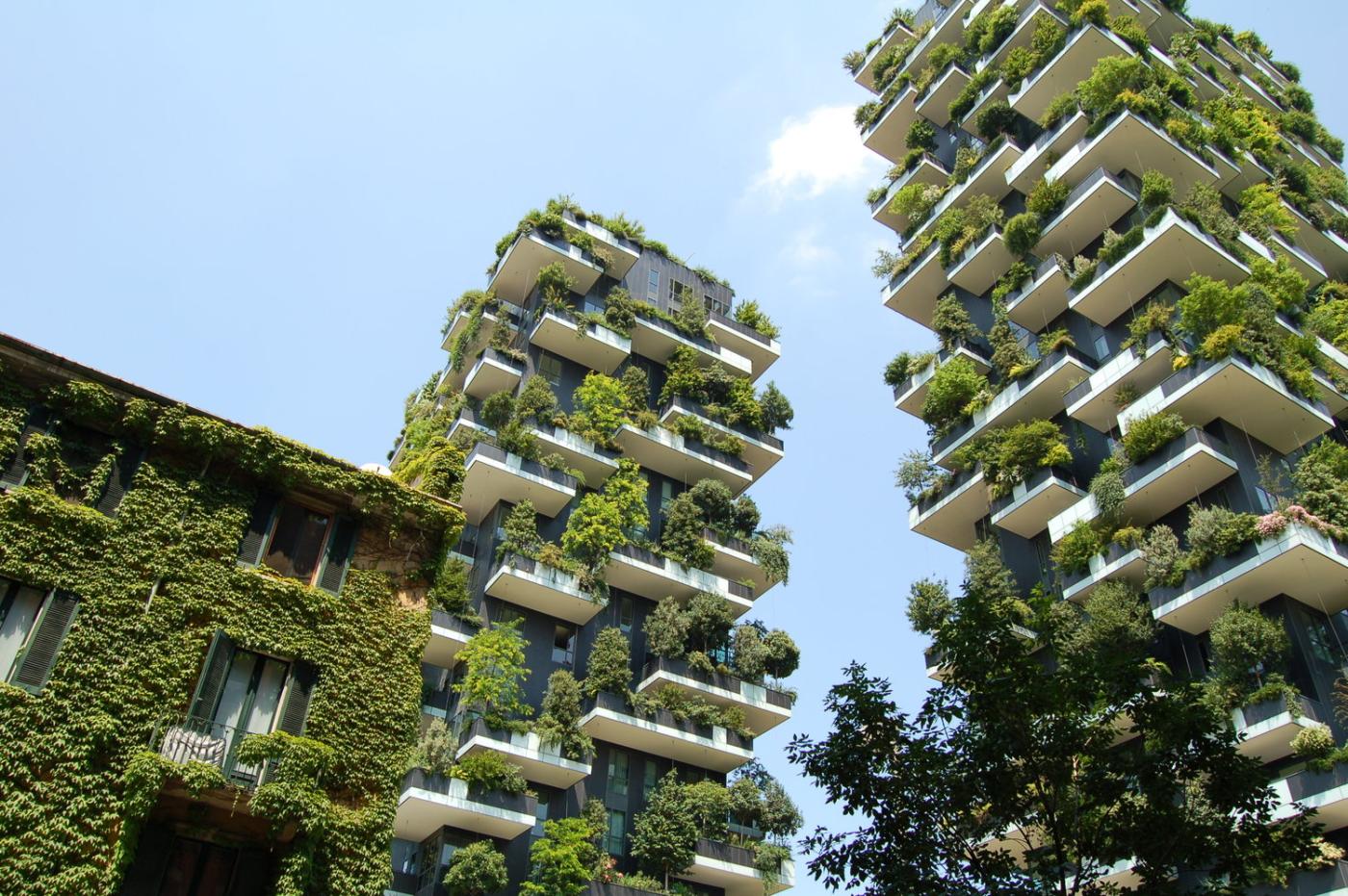
Initially launched in 2013, the Biophilic Cities network is a growing global community of partner cities, organizations and individuals committed to planning and designing cities with abundant nature, where citizens have rich contact with the flourishing natural world as an element of daily life. Cities from around the globe, from Austin to Barcelona and from Norfolk to Singapore, that are dedicated to improving the connection between residents and urban nature are building upon biophilic principles to improve the sustainability, health and wellness of their places, residents, workers, and visitors. In addition to partner cities, global organizations who seek to effect change in broad range of areas, such as health, equity, and resilience, are partnering with Biophilic Cities to examine how abundant and accessible nature can enable cities to flourish. Partner organizations include Urban Greenspaces Institute, bioPhilly, the Earth Day Network, and Green Roofs for Healthy Cities.
Director of Partner Cities: Carla Jones-Harrell
BIOPHILIC CITIES JOURNAL
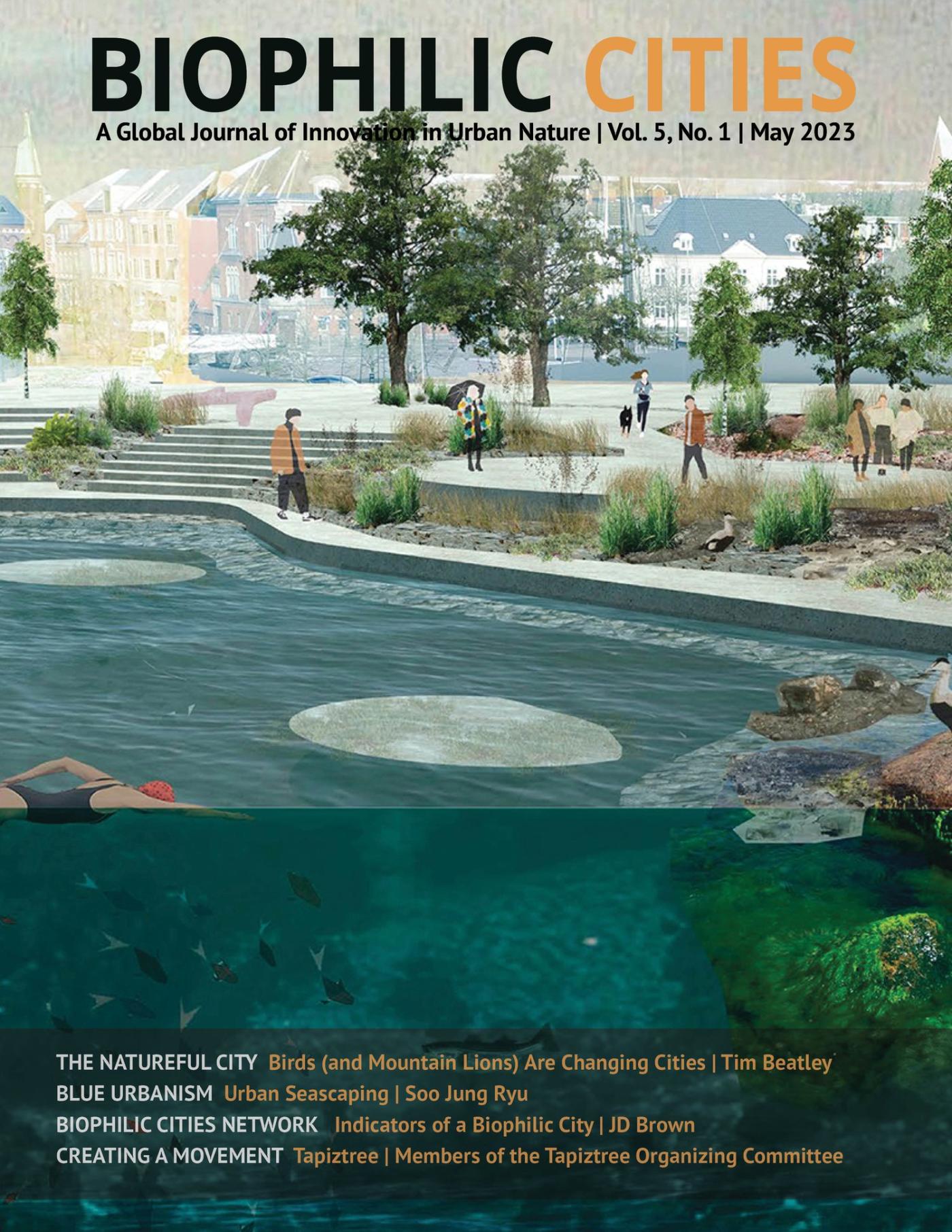
The Biophilic Cities Journal is an online publication that features innovation in urban nature. Published annually and produced by Biophilic Cities, this resource partners with scholars and advocates from across the globe to build an understanding of the value and contribution of nature in cities to the lives of urban residents. Contributors to the journal are working in concert to conserve and celebrate nature in all its forms and the many important ways in which cities and their inhabitants benefit from the biodiversity and wild urban spaces present in cities. The journal features publications, projects, initiatives, and case studies that further the research supported by Biophilic Cities.
View past issues of the journal.
Access Biophilic Cities resources.
SUPPORTED COURSES —
Biophilic Cities supports courses in the Department of Urban and Environmental Planning connecting curriculum and research. These courses include:
PLAN 3860/6860, Cities and Nature
RESEARCH AFFILIATIONS —
Biophilic Cities Advisory Board
Biophilic Cities Steering Committee
Summer 2026
June 1 - 27, 2026
Application Deadline: February 15, 2026
Learn More and Apply
UPCOMING INFORMATION SESSION
— FRI. JANUARY 23, 11AM - 12PM, Campbell 220B
Virtual Information Session Recording
This virtual information session took place on December 1, 2025.
TIMESTAMPS:
Greece: 00:01:49 - 00:14:31
Barcelona: 00:15:13 - 00:28:58
Venice: 00:29:12 - 00:43:52
Vicenza: 00:44:06 - 00:54:03
General Information about Study Abroad, the Application Process, and Financial Aid: 00:54:07 - 01:12:13
PROGRAM OVERVIEW
The Summer Program in Vicenza offers an immersive academic experience that brings together architectural study, cultural exploration, and intensive drawing practice in one of Italy’s most remarkable regions. Based in the historic city of Vicenza—home to Andrea Palladio and at the heart of the Veneto—the program invites students to engage directly with the architectural and urban landscapes of Northern Italy through sustained observation, analysis, and representation.
Over the course of the program, students investigate the intricate relationships between place, culture, and design by documenting and reflecting on the built environment. Field excursions across the Northeast of Italy serve as open-air studios where students explore themes of form, materiality, history, and civic identity. Guided visits to cities, buildings, and landscapes provide a framework for understanding the enduring dialogue between natural context, human occupation, and architectural expression. Through drawing, students learn to “ask better questions,” developing both critical insight and the capacity to translate experience into architectural understanding.
Combining a rigorous academic structure with the spontaneity of fieldwork, the program emphasizes drawing as both a method of discovery and a mode of communication. Sketchbooks, analytical studies, and final reflections become tools to record, interpret, and reimagine the Italian landscape. By working directly on site, students cultivate a disciplined yet exploratory practice—one that balances precision with curiosity and craftsmanship with speculation.
The experience culminates in an exhibition of student work, showcasing the diverse perspectives and visual narratives developed throughout the summer. Together, these drawings form a collective record of an intellectual and cultural journey—an exploration of how seeing, thinking, and making converge in the study of architecture abroad.
LOCATION
This summer program is based in Vicenza, in the Veneto region of Italy. With a population just over 100,000, Vicenza is home to the Villa Rotonda and numerous other buildings by Palladio. It is located approximately 30 minutes by train from the city of Venice.
LEARN MORE —
Program dates, Program details, Planning Information, Program Costs, Financial Aid Information and Application Details can be found at UVA's Education Abroad Website.
Graduating 4th years and rising 4th years are prioritized in the admission process, but graduate students, and rising 2nd and 3rd years are also eligible to apply. Applicants must meet the Eligibility Criteria to participate in an education abroad program.
Please note: School of Architecture students are encouraged to apply for dedicated financial aid for this program. This is a Walker Global Experience Scholarship Program - supported by a generous $2 million gift. Students may apply for an award of up $5,000 to cover expenses such as program tuition fees, room and board, transportation and incidental costs.
ARCH 5800: Vicenza Program I, 3 credits
ARCH 5801: Vicenza Program II, 3 credits
Syllabus Vicenza 2024
Objectives
Students take both 3-credit courses (for a total of 6 credits), in which the student will be given the opportunity to:
- Develop freehand drawing skills through instruction in diagramming, measuring, and recording what they see in sketches and analytical drawings.
- Develop the essential skill of observing relationships both particular to the place and those that are universal to human occupation.
- Analyze and record the development of prototypical constructions at the scale of the town, building, and building element. This includes particular architectural types such as Roman and medieval towns, the villa and palazzo types, and also includes elements and conditions such as the window and corner.
- Address universal conditions such as threshold, boundary, and frame and how these conditions are approached at a range of scales.
- Consider the making of civic identity through the study of the development of the Venetian town from a Roman outpost to modern economic power as the community incorporates physical, political, economic, religious, pugilistic, agricultural, intellectual, and artistic influences.
Completion Requirements & Grading
Completion will be defined by and grading based on level of productivity, attentiveness, range and quality of critical inquiry and documentation, and degree of improvement in communicating observations through sketching and analytical drawing. Final grading takes place in the fall semester following the summer term.
Luis Pancorbo | lgp6t@virginia.edu
Associate Professor in Architecture, Professor Pancorbo's research interests focus on the technical dimension of architecture and its influence on the methodology of architectural design, American industrial architecture, and industrial ruins and derelict productive landscapes.
Ines Martin Robles | imm3x@virginia.edu
Associate Professor in Architecture, with research interests in Modern Spanish and Ibero-American architecture, the survival of the past through tradition, and the role of memory for architectural design methodology.
J TERM 2026
DECEMBER 27, 2025 – JANUARY 07, 2026
APPLICATION DEADLINE: OCTOBER 1, 2025
LEARN MORE AND APPLY
INFORMATION SESSION
-
Thursday September 18, 11am - 12pm
Campbell 220B
Apply for School of Architecture Study Abroad Funding for J-Term 2025
This course provides firsthand, direct knowledge of the Modern Architecture International Panorama through an intensive program of on-site visits in Madrid, Castille, and Andalusia, a cultural territory composed of a mix of Christian, Jewish, and Muslim elements that, with the later addition of profound American contributions, produced the first global civilization of the modern world.
The course complements the knowledge of architectural masterpieces and architectural precedents studied at the School of Architecture, combining site visits, lectures, and meetings with architects.
This program is open to students from across the University with a strong interest in architecture. No background in architecture or drawing is required.
See this program in action! Check out the UVA January Term Spain Instagram.
This program is based in Madrid, Spain. The Spanish capital and largest city in the country, Madrid has a population of about 3.2 million inhabitants and is known for its parks, plazas, and museums.
Participants will spend three nights in Cordoba, whose historic city center including the Great Mosque of Cordoba is a UNESCO World Heritage site.
Day trips outside of Madrid (El Escorial and Salamanca or similar) and Cordoba (Granada and Sevilla) are included in the program.
European Modern Architecture
ARCH 3500 (undergraduate) or ARCH 5500 (graduate); 3 credits
The main objective of the course is the knowledge of the modern European architectural tradition through direct experience of a series of key buildings. Architectural knowledge has traditionally been transmitted through drawing and word. Drawing has been the main tool used by architects of different times, from the Renaissance (from Alberti to Palladio, Renaissance architects studied and drew Roman ruins), the Grand Tour of neoclassical architects, to the modern age (see examples of the travelogues of Le Corbusier and Louis Kahn).
Learning to draw is also a basic tool that will reinforce the competence of the students in the program as designers and will increase their capacity for analysis and critical thinking.
Understanding the historical development of modern architecture will allow students to place their interests as designers within the historical evolution of the discipline and be able to discern between their original contributions and the mere unconscious repetition of past experiences.
Architecture is a discipline in constant evolution. To understand contemporary architecture, you must understand the tradition in which it is part. Therefore, the visits will not be restricted to modern architecture, but will also include the basic invariants of the Spanish architectural tradition such as the monastery of El Escorial or the Plaza Mayor.
Hispanic culture is based on the hybridization and integration of many different races and cultures from middle eastern, Indian, and North African influences to Germanic and Celtic, and a series of profound Hispanic-American cultural contributions. Spanish culture is a social construct composed of a balanced mix of Christian, Jewish, and Muslim elements that produced the first global civilization of the modern world.
For the final assignment, students submit a photo log and one of the following:
- Travel log with notes and a minimum of 40 drawings.
- Essay 2,000-2,500 words about one of the visited buildings and its relationship with Spanish history of architecture.
Luis Pancorbo | lgp6t@virginia.edu
Associate Professor in Architecture, Professor Pancorbo's research interests focus on the technical dimension of architecture and its influence on the methodology of architectural design, American industrial architecture, and industrial ruins and derelict productive landscapes.
Ines Martin Robles | imm3x@virginia.edu
Associate Professor in Architecture, with research interests in Modern Spanish and Ibero-American architecture, the survival of the past through tradition, and the role of memory for architectural design methodology.
ABOUT THE COMPUTATIONAL TECTONICS LAB—
The Computational Tectonics Lab’s founder and director Dr. Ehsan Baharlou explores novel design strategies to shift the design approach from material- and fabrication-centered design processes to multispecies design. His research interests include integrating design computation with the process of materialization. Through his research lab, he aims to mediate the cyber-physical interactions between complex forms and advanced manufacturing tools, shifting from a paradigm of abstracted computational design toward an integration of both physical (fabrication and production) and digital investigations.
DIRECTOR —
Ehsan Baharlou, Assistant Professor, Architecture [baharlou@virginia.edu]
COMPUTATIONAL TECTONICS LAB CURRENT PROJECTS —
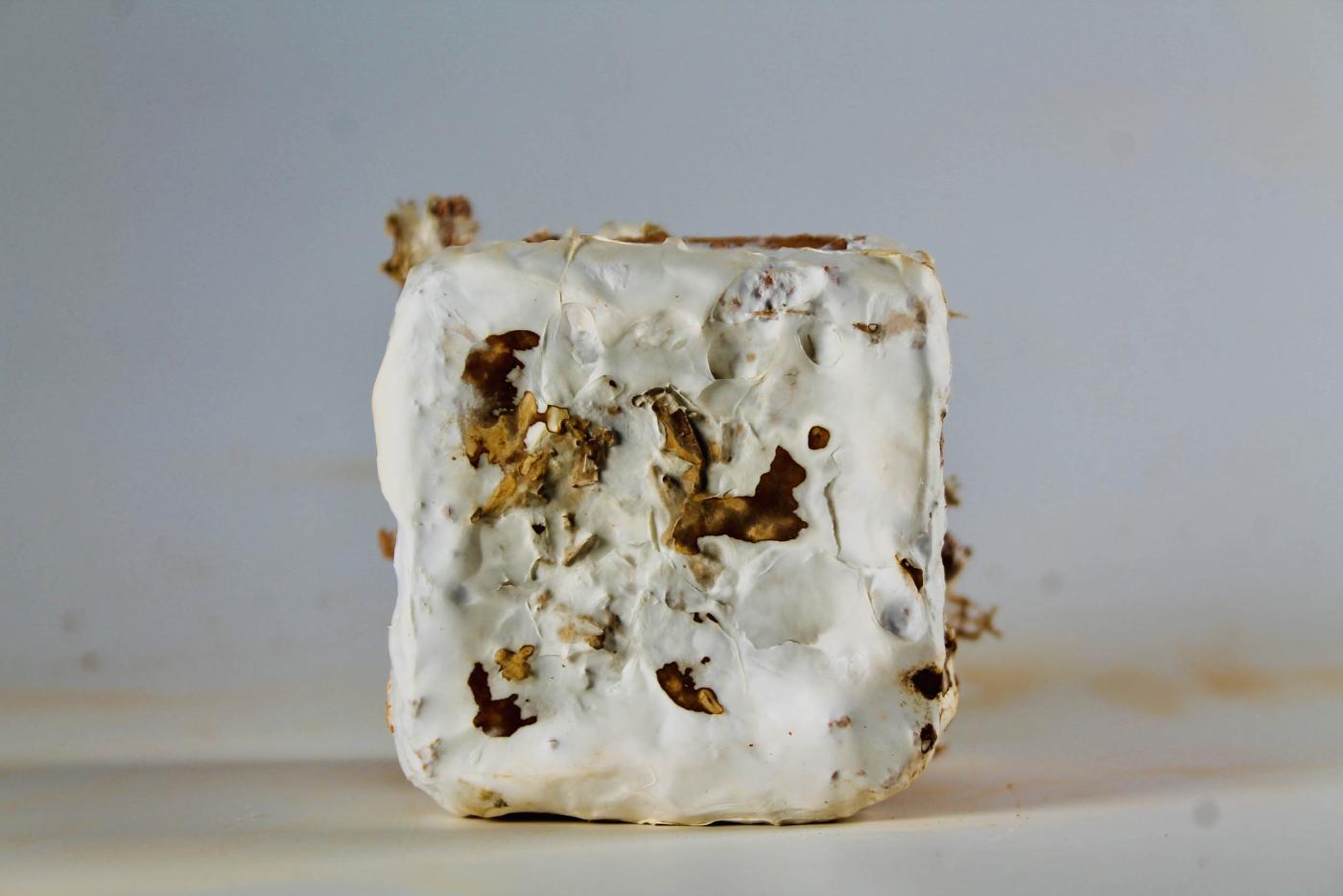
ROBOTIC FABRICATION OF ARCHITECTURED MYCELIUM COMPOSITES FOR SUSTAINABLE CONSTRUCTION
This research aims to create high-performance composite materials for building applications by utilizing the unique properties of mycelium. Mycelium is the vegetative part of fungi that possesses characteristics that can produce bio-based, low carbon, and energy-efficient building materials. The team will use architected mycelium composites, which combine mycelium with other materials to create sustainable structures. The composites are created by growing mycelium around a framework made of materials such as sawdust, straw, or hemp. The team hypothesizes that altering the inner makeup of mycelium composites can improve their thermal, acoustic, and mechanical properties. The goal of this pilot study is to understand key factors that affect the performance of additively manufactured mycelium composites.
Project Team: Ehsan Baharlou (UVA, Architecture, PI), Osman Ozbulut (UVA, Engineering, Co-PI), Prasanna Balachandran (UVA, Materials Science and Engineering, Co-PI), Omoanghe Isikhuemhen (North Carolina Agricultural & Technical State University, Microbiology, Project Expert)
Funding: UVA Environmental Institute
Learn more about this project.
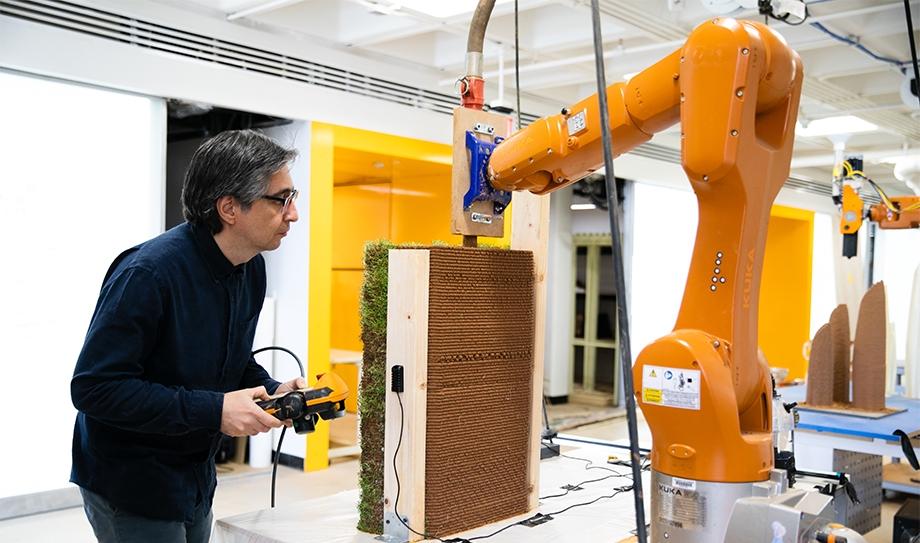
3D PRINTING OF ECOLOGICALLY ACTIVE SOIL STRUCTURES
For this project the research team is combining additive manufacturing’s speed, cost efficiency and low energy demands with locally resourced, bio-based materials. This design philosophy and approach aligns with a sustainable development practice called the circular economy. The research contributes to the potential to reduce the environmental impact of buildings through green walls, which incorporate vegetation into the outer surface of the structure. Their study aims to first assess the feasibility of direct printing of plant-supporting soil structure, and then utilize matric potential and volumetric water content measurements to quantify the influence of the printing process on plant germination and long-term viability. Ongoing research would study the influence of geometry on water retention characteristics of the freestanding structure, which would enable the design of a precise watering schedule to be developed for 3D printed soil for a given plant species.
Project Team: Ehsan Baharlou (UVA, Architecture, PI), David Carr (UVA Environmental Sciences, PI), Ji Ma (UVA, Materials Science and Engineering, PI)
Research Assistants: Spencer Barnes, Leah Kirssin, Elizabeth Needham
Funding: UVA 3Cavaliers Program, UVA Harrison Fellows Program
Learn more about this project.
SUPPORTED COURSES —
The Computational Tectonics Lab supports courses connecting curriculum and research. These courses include:
Advanced Research Studios (graduate and undergraduate) examining robotic additive manufacturing, robotic ecotectonics, behavioral robotic fabrication, non-standard mass timber structures, and wood proto-architecture.
Special Topics Seminars and Computation Seminars are also supported by the research and teaching of Dr. Ehsan Baharlou and the Computational Tectonics Lab.
Learn more about related courses.
RESEARCH AFFILIATIONS —
The Computational Tectonics Lab’s affiliated research partners include:
coming soon