FABLAB
The Fabrication Lab, or FabLab, is a center for empowering people with tools for making, prototyping, and construction at a range of scales, materials, and techniques. As the staff and students of the FabLab Team, we are dedicated to a creative and inclusive environment through access, training, consultation, and support on a range of analog and digital fabrication tools for UVA students, staff, and faculty. We engage projects and research from all the departments of the School of Architecture, connect to shop and lab partners all over Grounds through the MakerGrounds network, and develop research discovering new materials, tools, and fabrication processes related to the built environment.
The FabLab Team is run by Melissa Goldman, Trevor Kemp, and Andrew Spears — three full-time fabrication experts — and a Crew of undergraduate and graduate teaching assistants, all passionate about making and teaching. The team trains basic and advanced techniques and tools, develops and supports curricula, pushes and publishes research, and maintains a positively enthusiastic environment for investigation and high craft.
LEARN MORE ABOUT THE FABLAB.
MILTON LANDLAB
Milton LandLab is a collaboration between the School's Landscape Architecture faculty and students with support from the FabLab. It is based at the 172-acre Milton Airfield located about eight miles east of Campbell Hall, and a formerly operating airport owned by the University of Virginia. As a historically disturbed site (from its use as a WWII airstrip to its present utilization by the Rivanna Radio Control Club's model airplane runway), with frontage along the Rivanna River, forested in parts, meadowed in others, Milton Airfield provides a site for extended study, large-scale intervention, and intimate engagement with landscape media.
Milton LandLab provides a unique opportunity for UVA School of Architecture students to study and propose methodologies and practices for design research based in landscape mediums. Driven by the need to work at very large scales, with time, and out in the landscape — the Milton LandLab is a place where students, working collaboratively with each other and with faculty, can benefit from one-to-one engagement with materials, plant forms, time, tools, and processes of design, installation and maintenance. Defined as a space for experimentation, observation, practice, disturbance and site maintenance, Milton LandLab enriches design education and the field of landscape architecture through its innovative and forward-oriented approach — at large scales, in real time and through engagement with landscape itself.
LEARN MORE ABOUT MILTON LANDLAB.
DIGITAL DESIGN LABS
UVA School of Architecture operates Digital Design Labs which include computer graphics labs, classrooms, projection facilities, a print center, and clusters, offering a suite of resources that support our students' academic success and their ability to be leaders in the realm of design experimentation with advanced technologies. Digital Design facilities include:
+ Digital Media Lab: This lab hosts digital media workstations with software that includes CAD, animation, image processing, rendering, analog and digital video capture, editing and recording, video conferencing, and multimedia authoring. It also includes multiple flatbed scanners, batch and large format slide scanners, grayscale laser, color laser, and photo printers. Analog videotape editing equipment is also available for standalone work or in combination with digital video capture, editing, and recording.
+ General Purpose Digital Classroom: This is a supervised-use only classroom with software including: GIS, CAD, animation, structural analysis, image processing, rendering, digital terrain modeling, desktop publishing and more. This classroom is only available during scheduled class sessions.
+ Studio Computing Clusters: Windows and Mac computers are available throughout the 3rd and 4th floor studio spaces, including the Technology Bridge on the 4th floor mezzanine.
+ Print Center: The Print Center at the School of Architecture provides students and faculty with access to a variety of regular and large-format high-resolution color plotters and printers.
1970
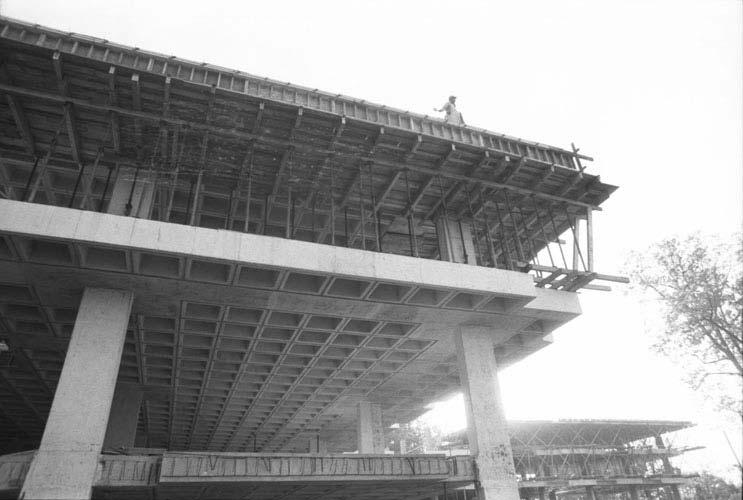
Campbell Hall was named for Edmund S. Campbell who served as director of the McIntire Department of Art from 1927 to 1950. During this time, the architecture program was part of the Department of Art. The building was designed and constructed by Sasaki Associates, design consultant Pietro Belluschi, and Rawlings, Wilson and Associates.
2008
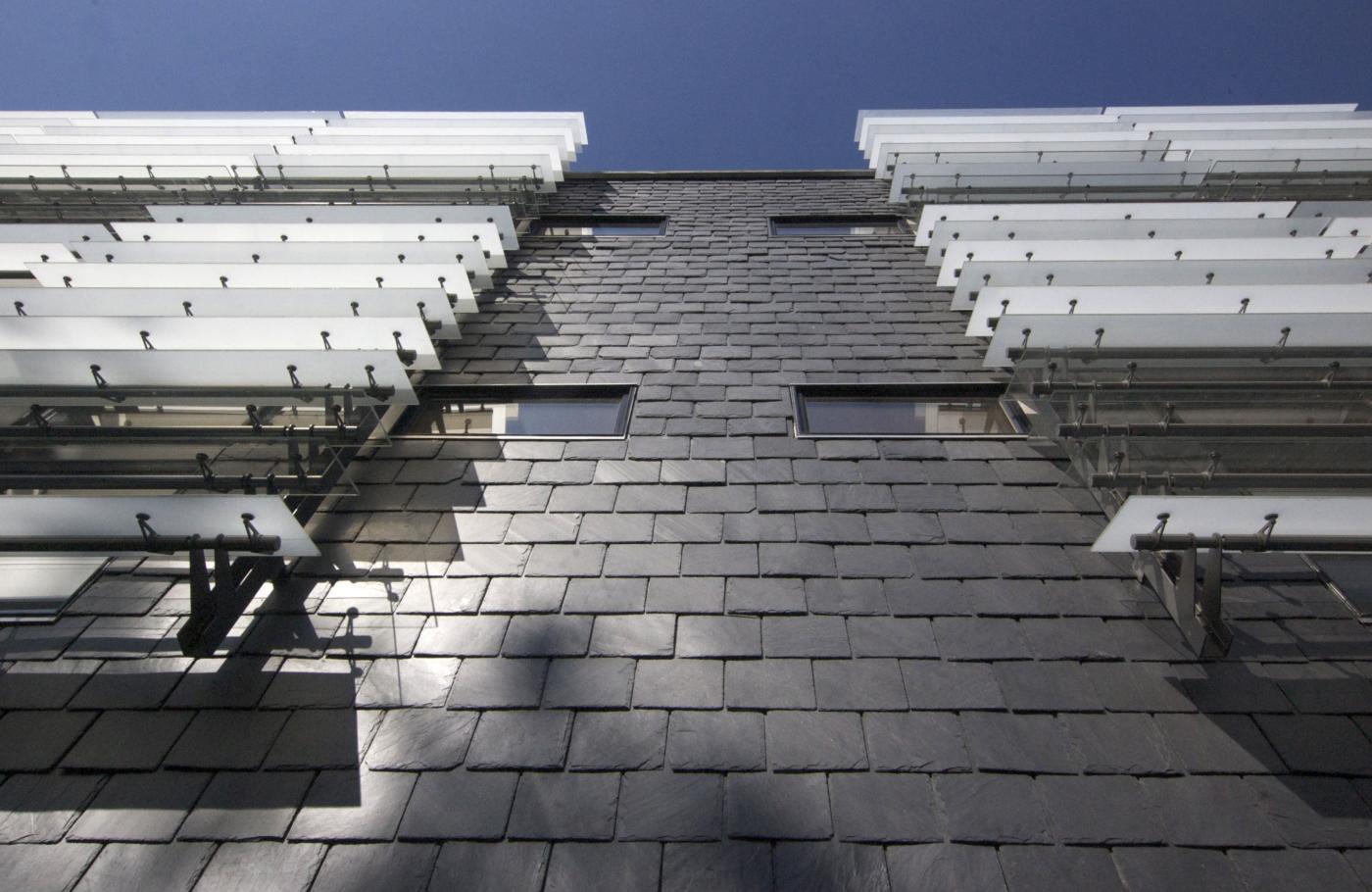
Professor Bill Sherman's design of the south addition to Campbell Hall recalls the site relationship between UVA's pavilions and its historic Lawn. The south porches play an important climatic role - in the summer they act as chimneys, cooling themselves as air moves, and in the winter they act as solaria, capturing light and warmth. The glass louvers filter sunlight into faculty offices and porches, shaping the spaces through the play of light and shadow.
2008
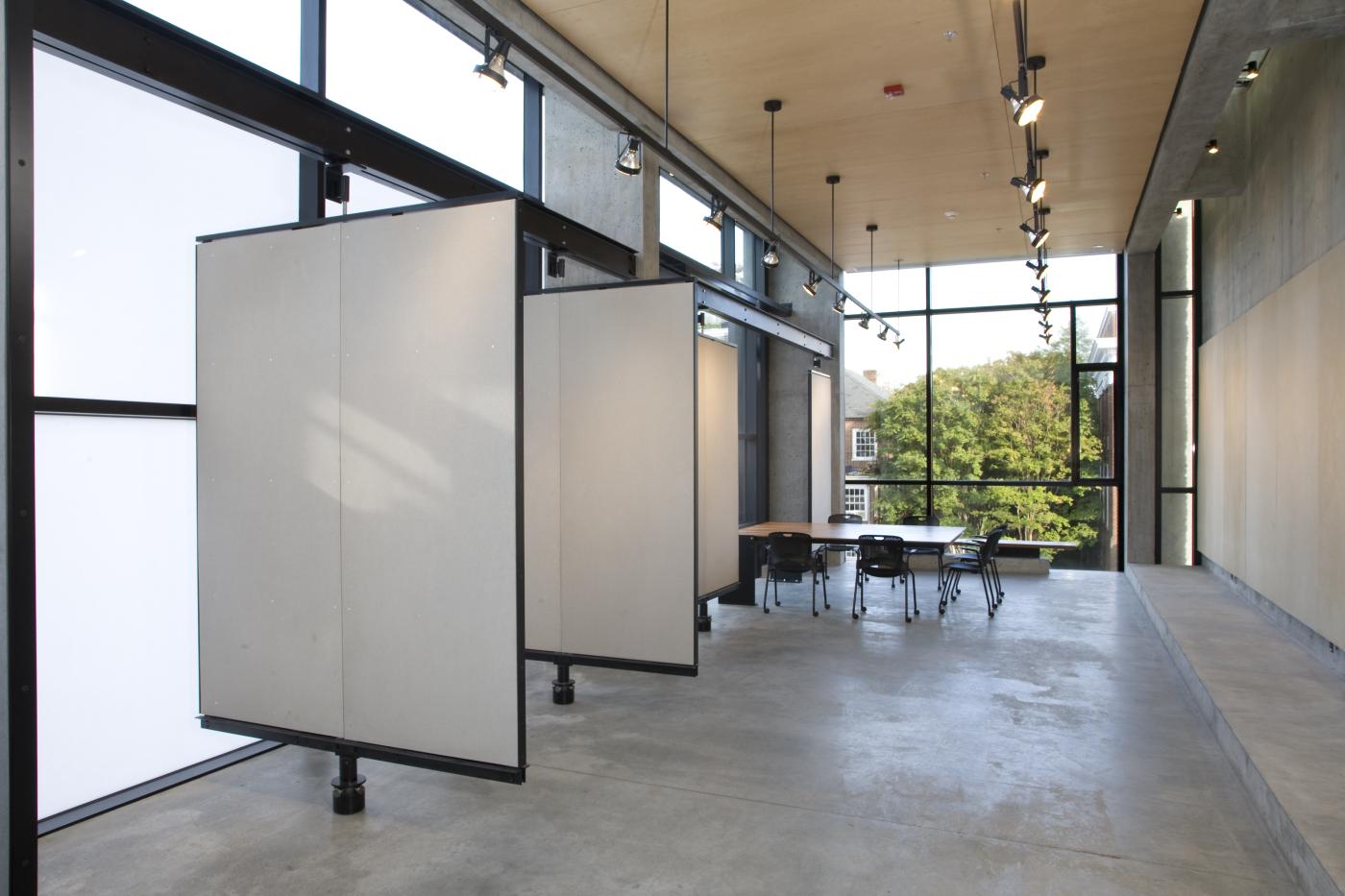
Designed by Professor W.G. Clark, the east addition serves as the face of the School of Architecture. Offering light-filled reviews spaces with full-height exhibition panels designed to pivot, the addition transforms the practice of teaching and learning within the School. Presentation, exhibition, discussion and debate - all critical to the design process - are opened up to the larger UVA community through large expanses of glass, showcasing the everyday creative energy of the school to visitors and passersby alike. Carefully selected materials: metal, concrete, glass, and wood, are crafted to highlight the beauty of their texture and detail.
2008
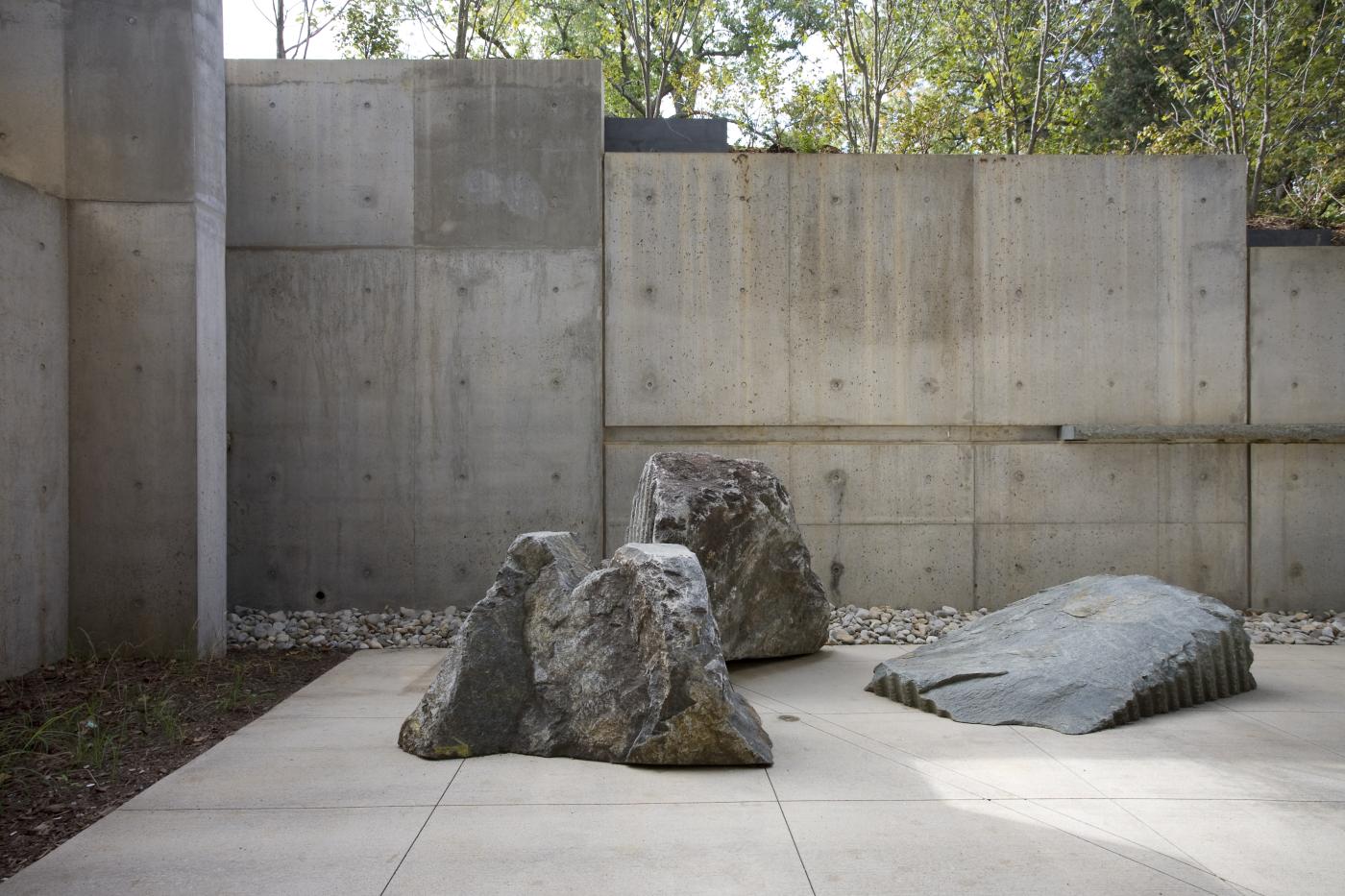
The South Wing + East Tower additions to Campbell Hall served to reconnect the School of Architecture to its larger context at UVA. Warren T. Byrd, Jr. articulated a vision for a series of new and adapted landscapes for Campbell Hall - a sequence of passages and places defined by three distinct, interrelated precincts: the Passage, the Traverse, and the South Slope. Each express regional and local hydrology, geology, and ecology and create places of gathering that mediate between the interior and exterior of Campbell Hall.